Let me start with a question.
Not a comfortable one.
If you knew — really knew — that no one would remember what you did, with no praise, no credit, and no “thank you,” would you still choose to sacrifice for others?
Today, I want us to slow down and look at one character from Frieren: Beyond Journey’s End — not to analyze his strength, but to examine his choice.
This is the story of the Hero of the South.
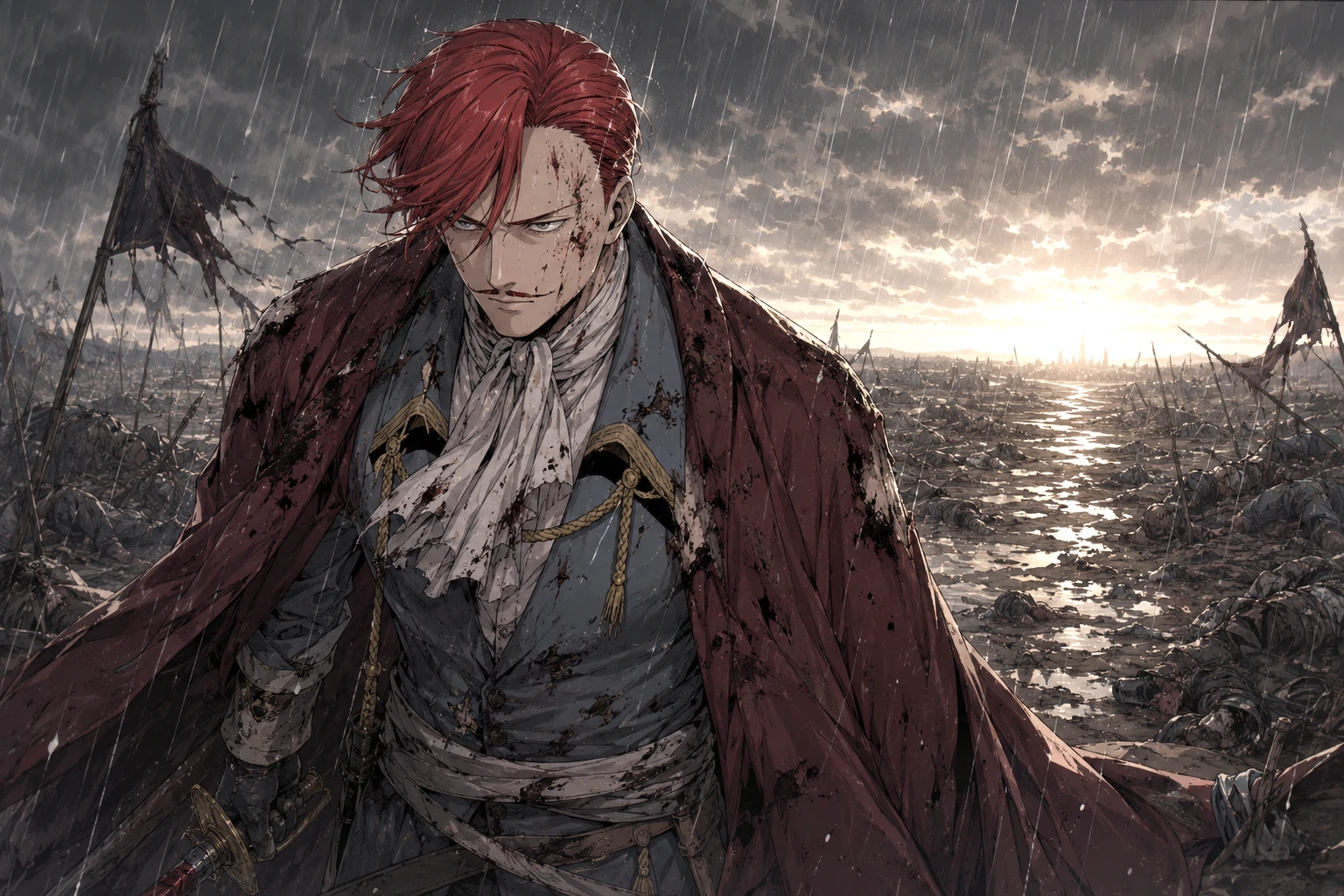
1. Who Was the Hero of the South in Frieren?
In Frieren’s world, heroes usually have names.
They are sung about. Remembered. Turned into legends.
But this man?
He doesn’t even have a name.
He is known only by a title:
The Hero of the South.
He lived before Himmel’s era, before the famous journey, and before the Demon King was defeated.
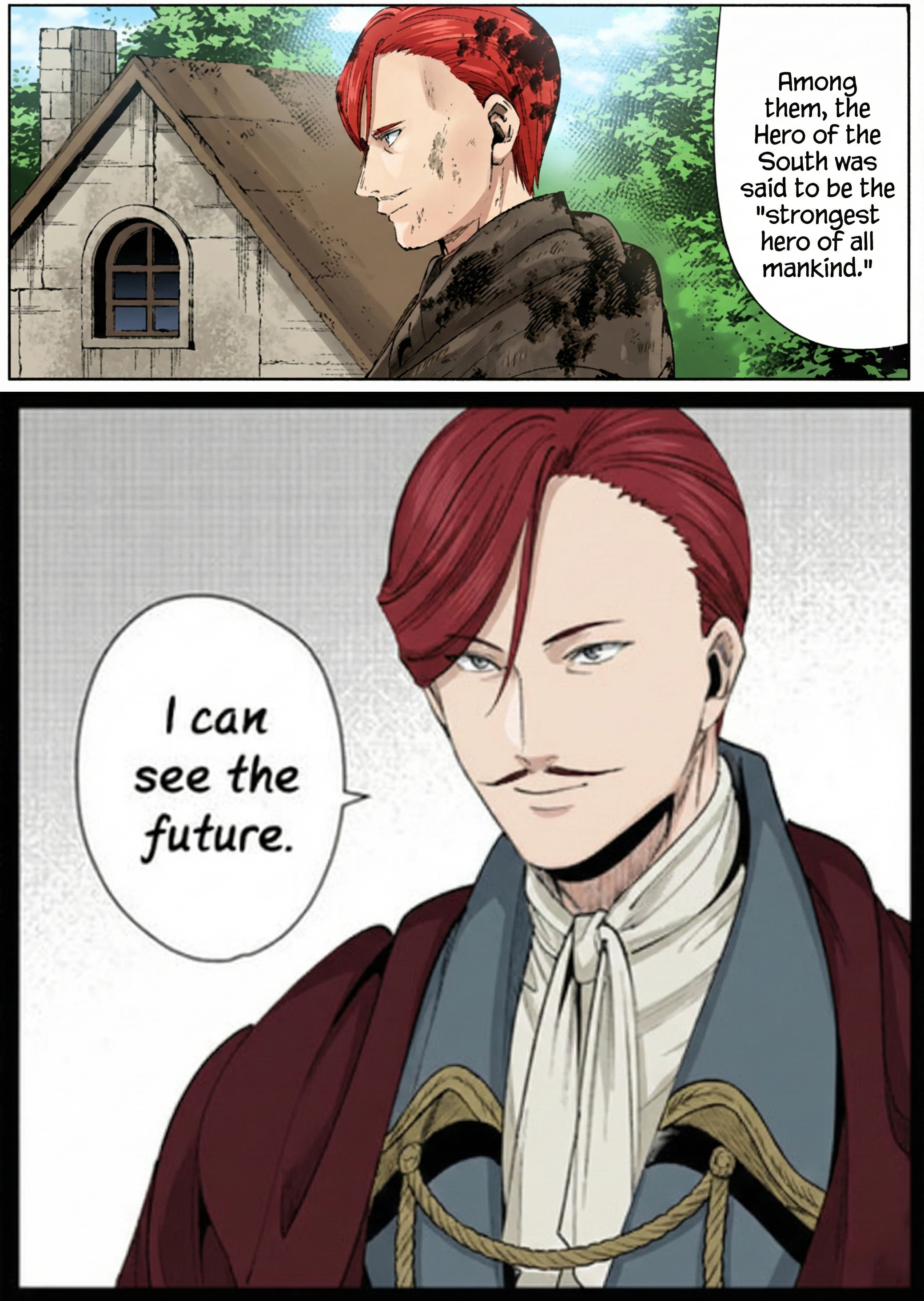
And yet, the Hero of the South was regarded as something extraordinary:
- Humanity’s strongest hero
- The only human known to possess perfect future sight
What the Hero of the South Accomplished in One Year
Now, let’s talk about what he actually did — because this matters.
Within one year, he:
- Completely wiped out the Demon King’s frontline forces.
- Pushed the demon army all the way to the Northern Plateau.
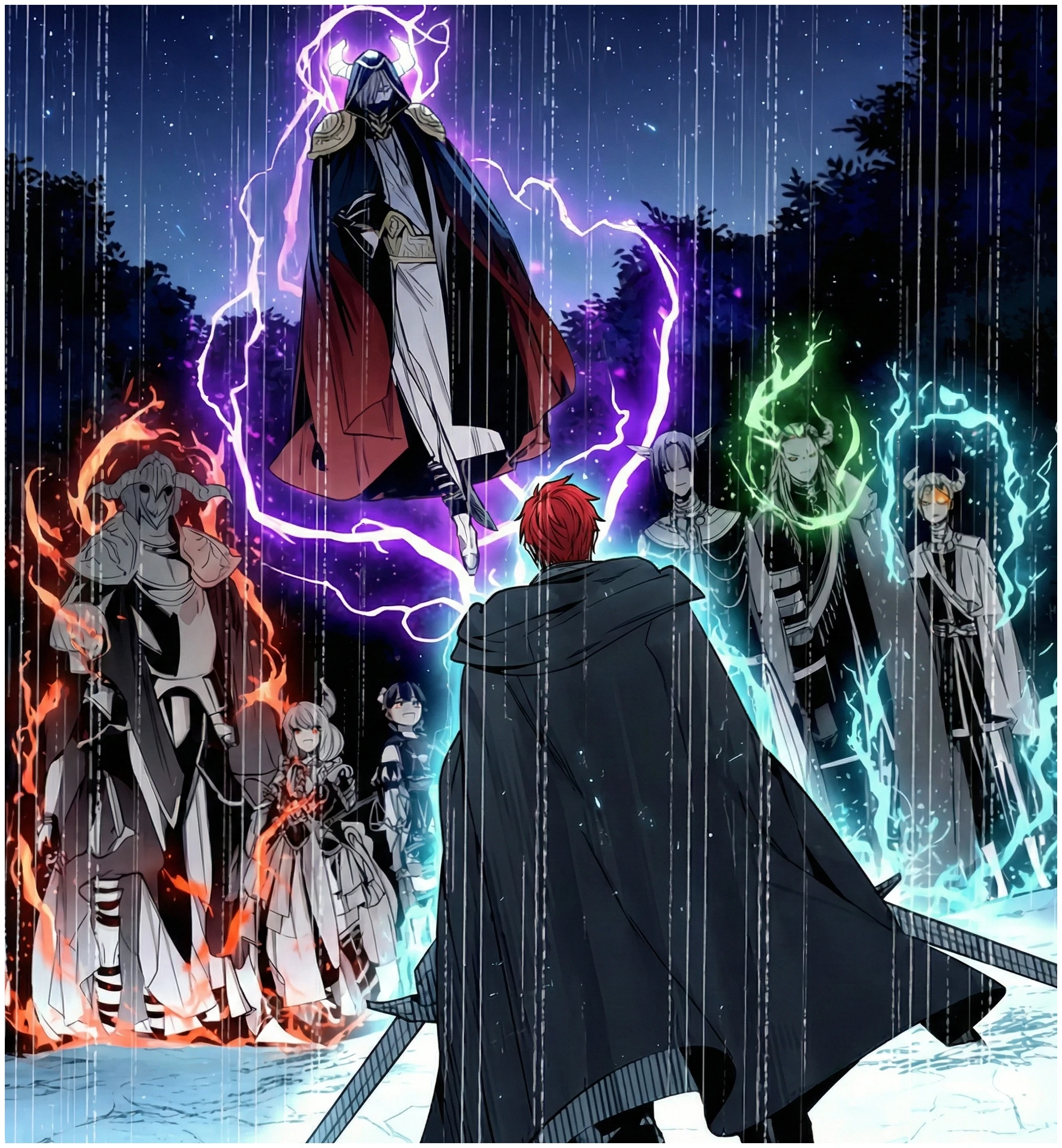
And there, at the very edge of humanity’s territory, he faced something no human should ever face alone:
- All Seven Sages of Destruction.
- Schlacht the Omniscient, the Demon King’s right hand.
Let that sink in.
Seven Sages.
And the most dangerous demon strategist in existence.
The Hero of the South’s Final Battle
In that final battle:
- He killed three of the Seven Sages.
- And with his last strike, he slayed Schlacht himself.
And then — he died.
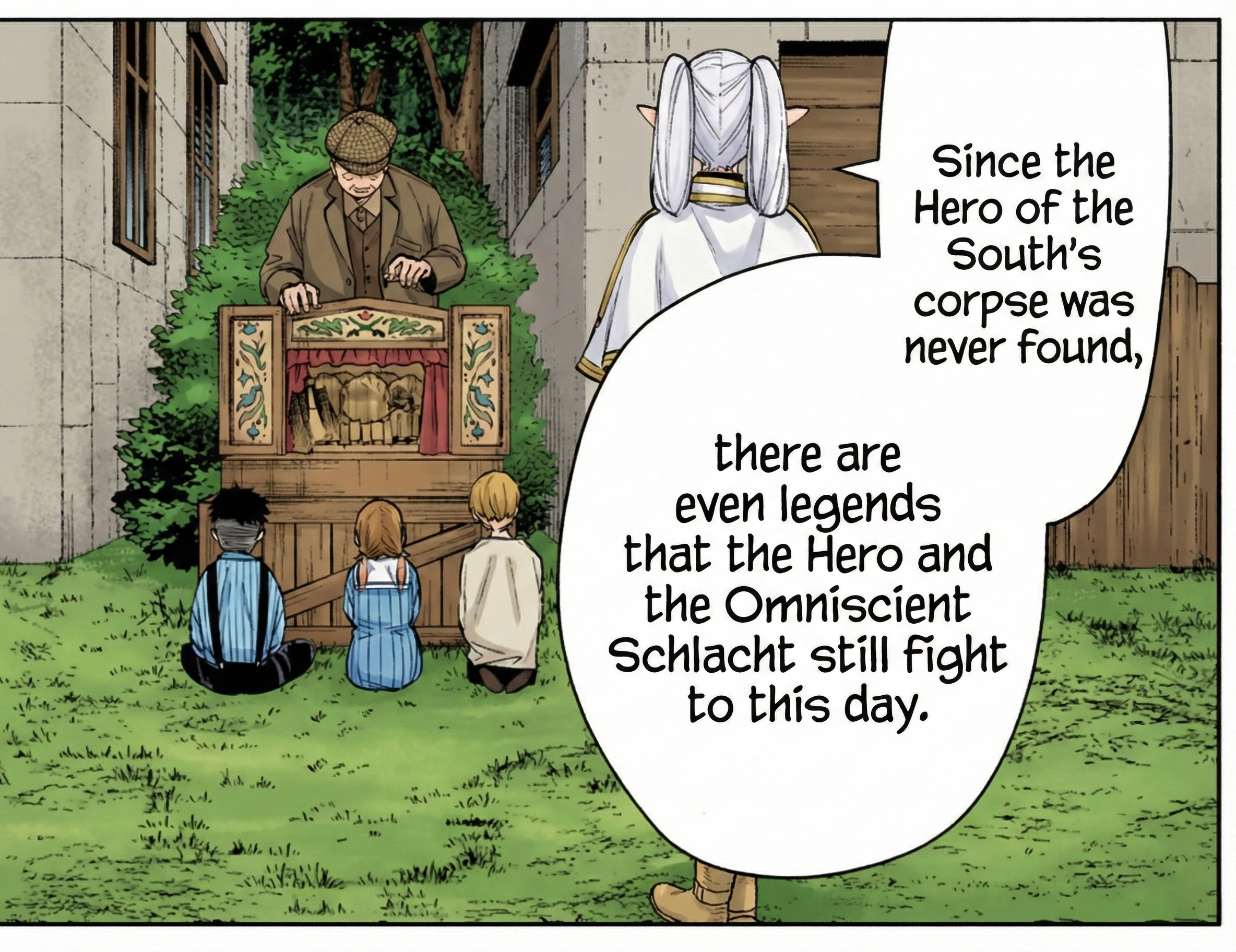
His body was never found.
Some people believed he was still fighting somewhere, locked in eternal battle.
Frieren, more realistically, says the demons probably consumed his body.
And you might think:
“So that’s it?”
No.
Why the Hero of the South Was Not Forgotten
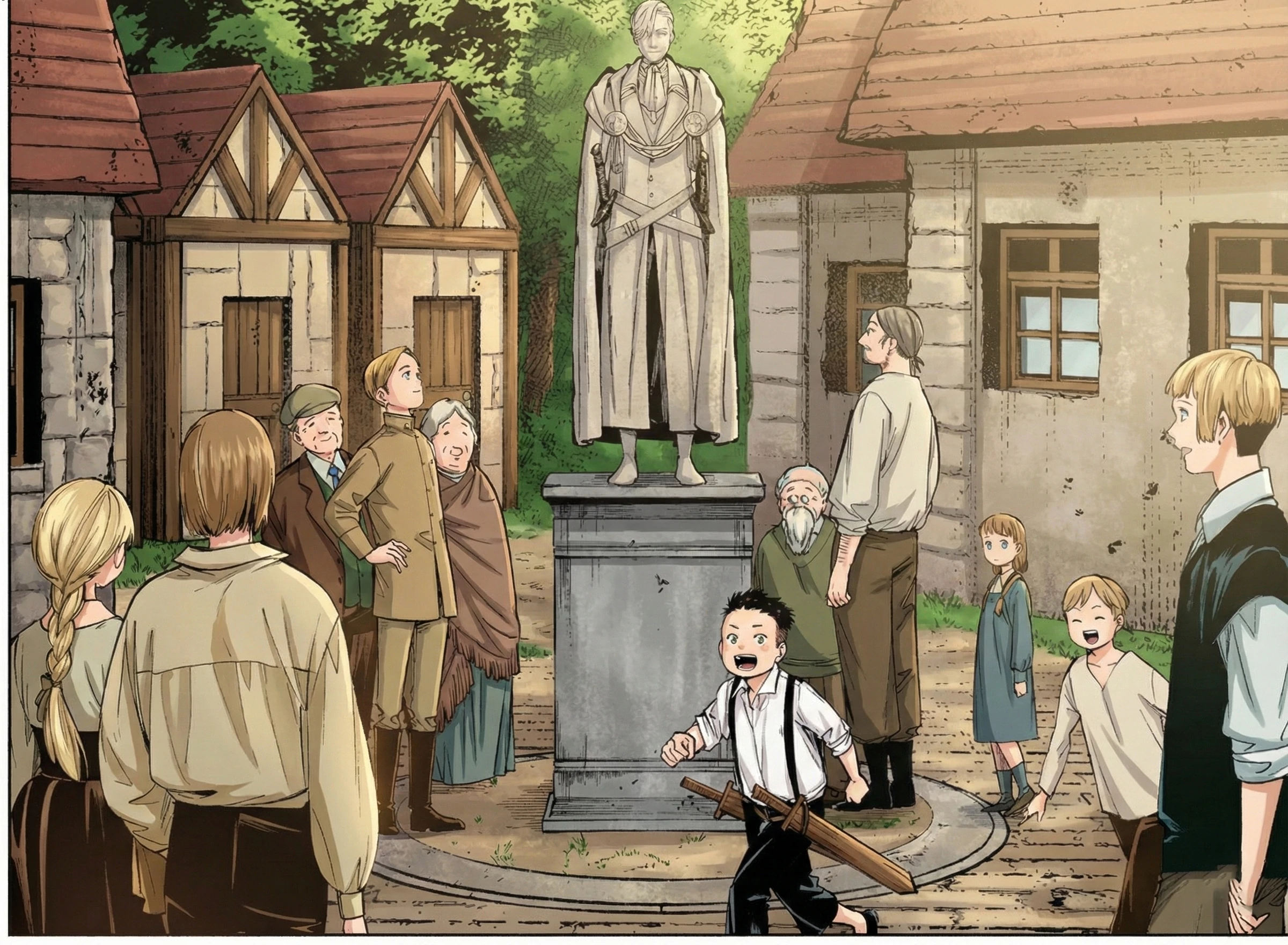
Years later, Frieren’s party arrives in Fabel Village.
They are asked to clean a statue.
Stark assumes it must be Himmel.
But it isn’t.
It’s the Hero of the South.
The villagers still remember him. They still gather around the statue. They still believe their land exists because of him.
And Frieren realizes something quietly:
Even without a name, he was not forgotten after all.
2. Why Did the Hero of the South Clear the Path for Himmel?
Now, this is where the story stops being epic and becomes personal.
One Year Before the Hero of the South’s Death
One year before that final battle, the Hero of the South visits Frieren, who is living quietly in the Central Lands.
He asks her to join him to defeat the Demon King.
Frieren refuses.
And this moment is crucial.
He doesn’t argue. He doesn’t insist. He doesn’t give a speech.
He simply accepts it.
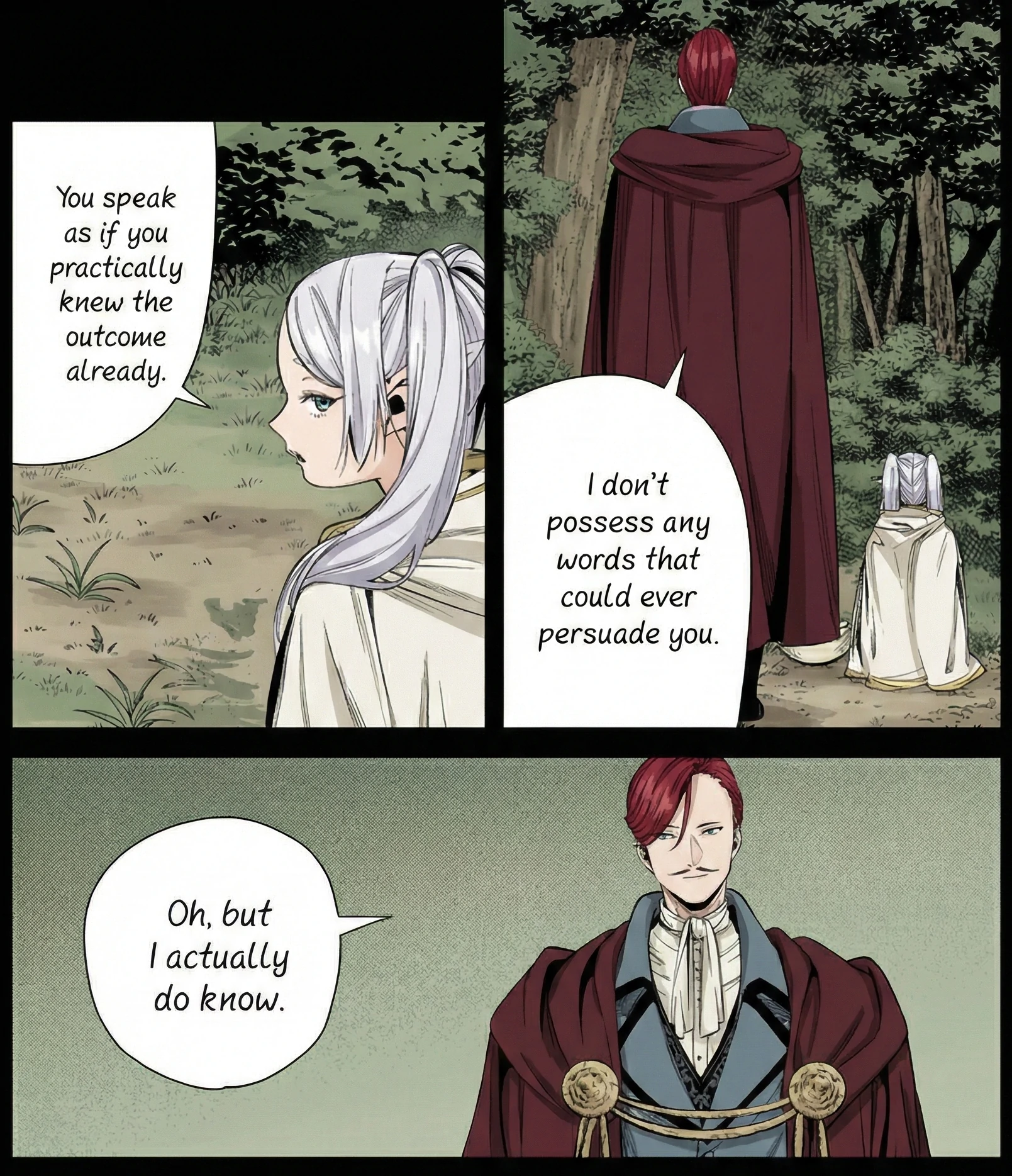
Frieren notices something strange about his reaction.
It’s as if he already knew the answer.
And she’s right.
He tells her the truth:
He can see the future.
He already knows:
- He will die in one year.
- He will fail to defeat the Demon King.
- His death is inevitable — even if Frieren joins him.
If you knew — without doubt — that you would fail, would you still walk forward?
Most of us wouldn’t.
We would hesitate. We would bargain. We would ask, “What’s the point?”
But the Hero of the South does something different.
He tells Frieren something else.
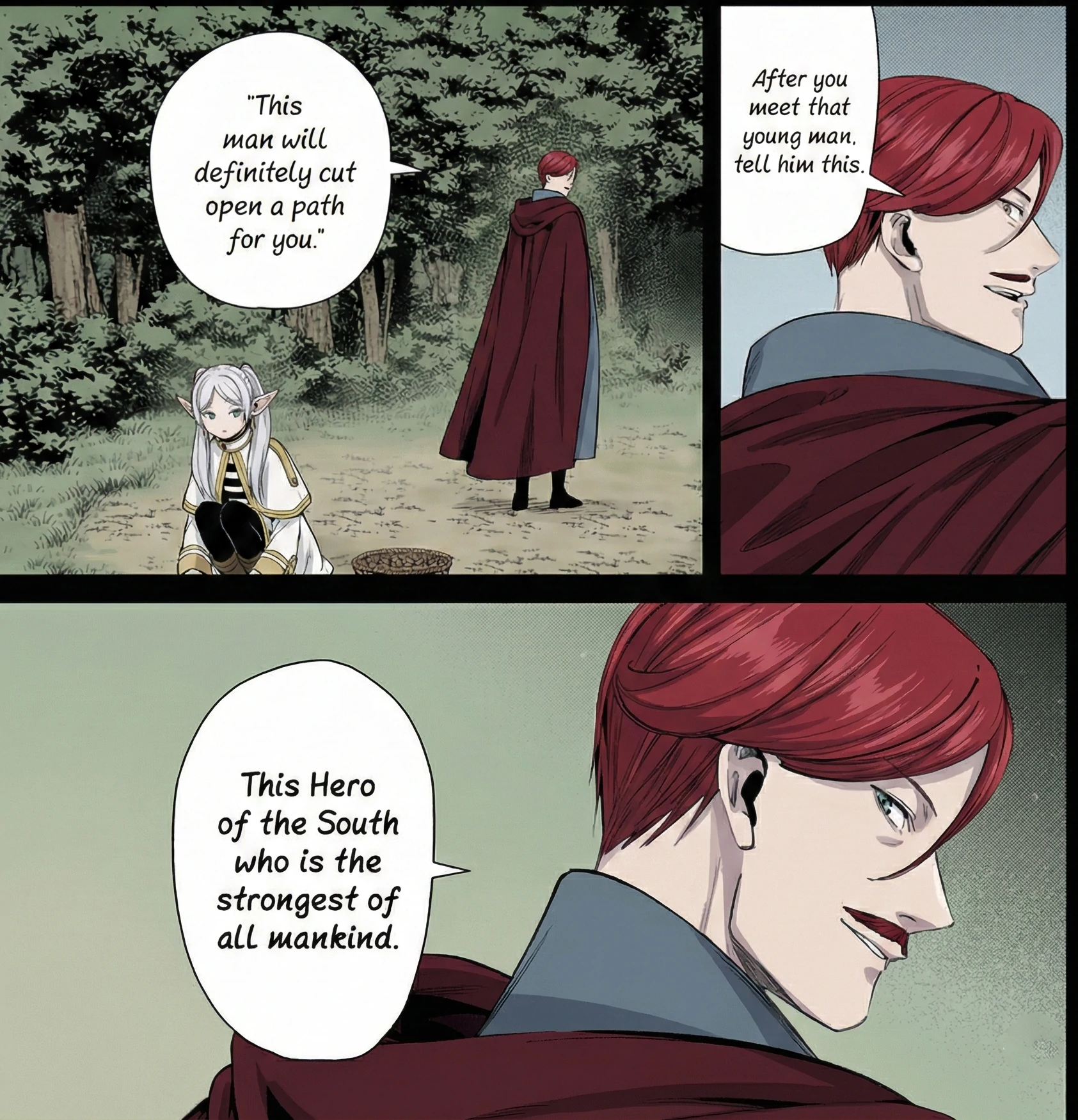
A young hero will soon visit her. She will journey with him. And that hero will defeat the Demon King.
Before leaving, he asks Frieren for only one favor: to tell that hero:
“I promise to blaze a path to the future. I, humanity’s greatest hero. The Hero of the South. Even if my great accomplishments are buried and forgotten in the shadows of history.”
Why Could the Hero of the South Make This Choice?
Here’s the key.
The Hero of the South understood victory differently.
Most people define victory as:
- “I survived.”
- “I won.”
- “My name is remembered.”
But for him, victory was simpler — and heavier:
- The future still exists.
- Humanity still moves forward.
That’s it.
If the future happens, then the mission succeeded — even if he doesn’t live to see it.
And yes, he feared being forgotten.
That line about being buried in history’s shadows?
That’s not arrogance.
That’s honesty.
He did care.
But his greatness is this: he didn’t let that fear decide his actions.
This isn’t:
“I don’t need to be remembered.”
It’s:
“Even if I’m not remembered, I will still do this.”
He didn’t choose glory.
He chose responsibility.
Someone had to clear the path.
And he accepted that it would cost him everything.
3. What Does the Hero of the South Tell Us About Sacrifice?
Now, let’s talk about our world.
Because this story hurts a little — for a reason.
4. Recognition, Sacrifice, and the World We Live In
Today, value is tied to being seen.
If effort isn’t recognized, it feels meaningless.
If sacrifice isn’t rewarded, it feels irrational.
We slowly stop asking:
“What needs to be done?”
And start asking:
“Will anyone notice?”
And that shift is dangerous.
Because the world doesn’t actually run on applause.
It runs on unseen effort.
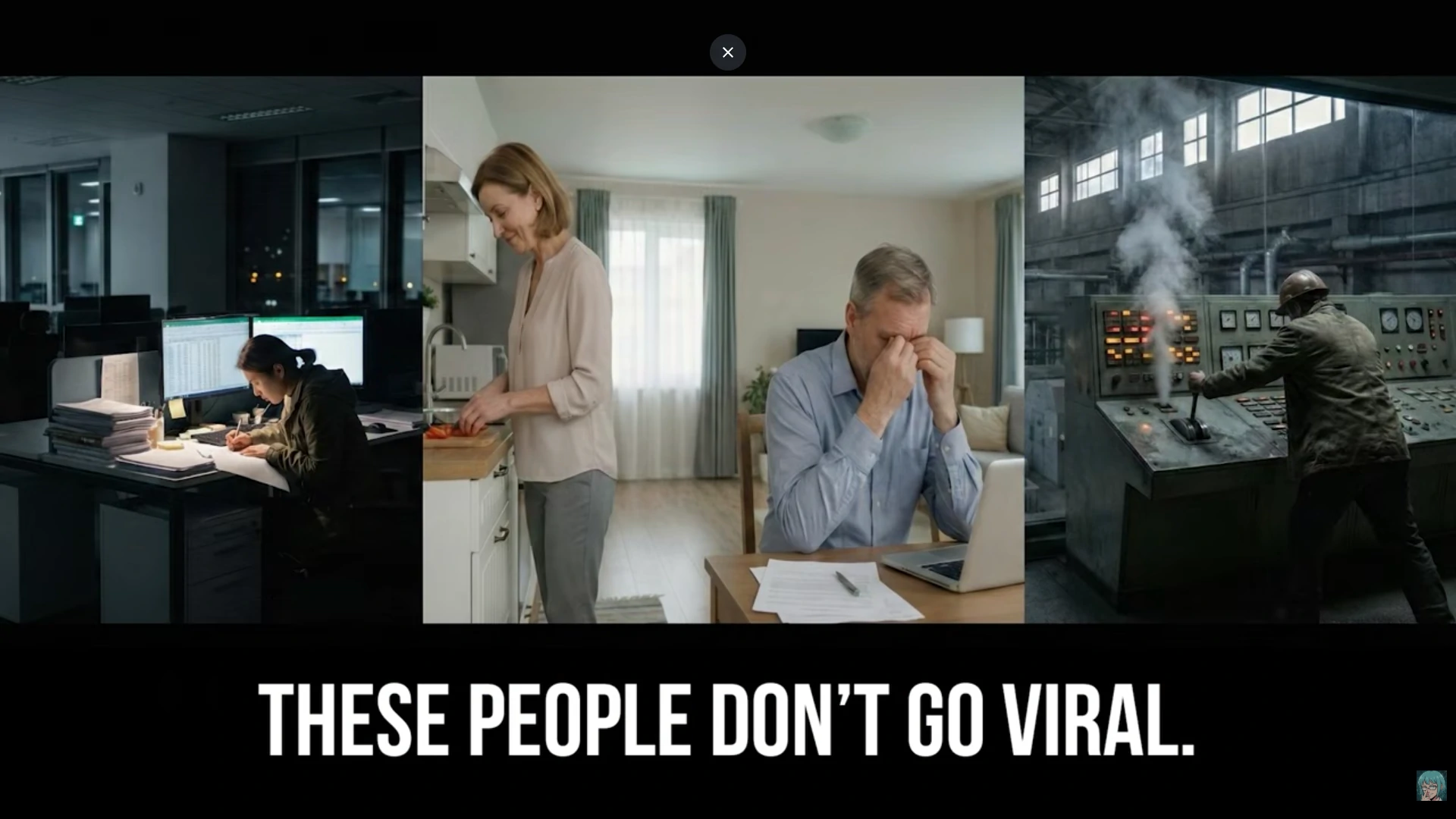
Think about your own life:
- The coworker who keeps things running without credit.
- The parent whose sacrifices are invisible for years.
- The person who does the right thing when no one is watching.
These people don’t go viral.
But without them?
Things fall apart.
Success becomes impossible.
A world where everyone waits to be rewarded before acting is a fragile world.
5. How Do We Keep Giving Without Expecting Immediate Return?
Let’s clear something up first.
The problem today is not that people don’t want to give.
Most people actually do.
They want to help. They want to contribute. They want to do something meaningful.
The real problem is this:
Giving has been psychologically tied to immediate return.
We’ve slowly learned to ask:
- “What do I get back?”
- “Will this be acknowledged?”
- “Is this worth it if no one notices?”
And once giving becomes a transaction, it stops being sustainable.
The Hero of the South Does Not Ask Us to Destroy Ourselves
Now, here’s something important.
The right answer is not:
“Be selfless at all costs.”
That’s unrealistic.
And honestly, that just burns people out.
What the Hero of the South shows us is something much more practical.
We don’t need to destroy ourselves for others.
We need to reframe how we define value.
Instead of measuring worth by recognition, we measure it by impact.
Instead of asking:
“Did someone see this?”
We ask:
“What does this allow to exist?”
Because some contributions are invisible by design.
They are not meant to be seen.
And some value is only visible in hindsight — years later, when the result finally appears.
When we accept that, something changes:
Giving stops feeling pointless — even when no one is watching.
6. Theories About the Hero of the South’s Final Battle
Before we end, there’s one more thing worth talking about.
Because even after everything we know, the Hero of the South’s story still leaves us with questions.
His ending was never shown clearly.
And because of that, many theories exist.
The Missing Body
The Hero of the South’s body was never found.
In the story, Frieren offers a realistic explanation:
The demons he fought were man-eaters.
It’s likely they simply consumed him.
That explanation makes sense.
And yet, another theory goes deeper.
Some believe the Hero of the South and Schlacht the Omniscient are still locked in battle somewhere beyond our view.
Why Schlacht Didn’t Want Frieren to See the Battle
Here’s another detail fans often point to.
Schlacht explicitly tries to prevent Frieren from seeing memories of the battle between him and the Hero of the South.
Think about that for a moment.
If the Hero of the South simply died, why hide it?
One interpretation is this:
Whatever truly happened in that battle, Schlacht didn’t want humans to learn from it.
Maybe it wasn’t just strength or power.
Maybe the most dangerous thing the Hero of the South possessed was not future sight…