
Kei Uzuki explained in one sentence would sound simple: he is the white-haired leader known as X, or Slur, who wants to destroy the Japanese Association of Assassins.
Yet almost nothing about him is truly simple.
Uzuki is simultaneously a frightened orphan, a reluctant student, a man destroyed by guilt, the leader of a family built from abandoned children, and one of the most dangerous assassins in Sakamoto Days. His body survives wounds that should kill him. His mind recreates the people who shaped his trauma. At his most terrifying, he can reproduce the swordsmanship of Takamura—the strongest monster the Order had ever unleashed.
This is the full story of Kei Uzuki: his past with Rion Akao, the birth of Slur, his contradictory personality, his combat abilities, and the reason he may be the most unpredictable enemy Taro Sakamoto has ever faced.
Major manga spoilers: This article discusses Rion Akao’s death, the Al-Kamar massacre, Uzuki’s alternate personas, and the battle in which Takamura is defeated.
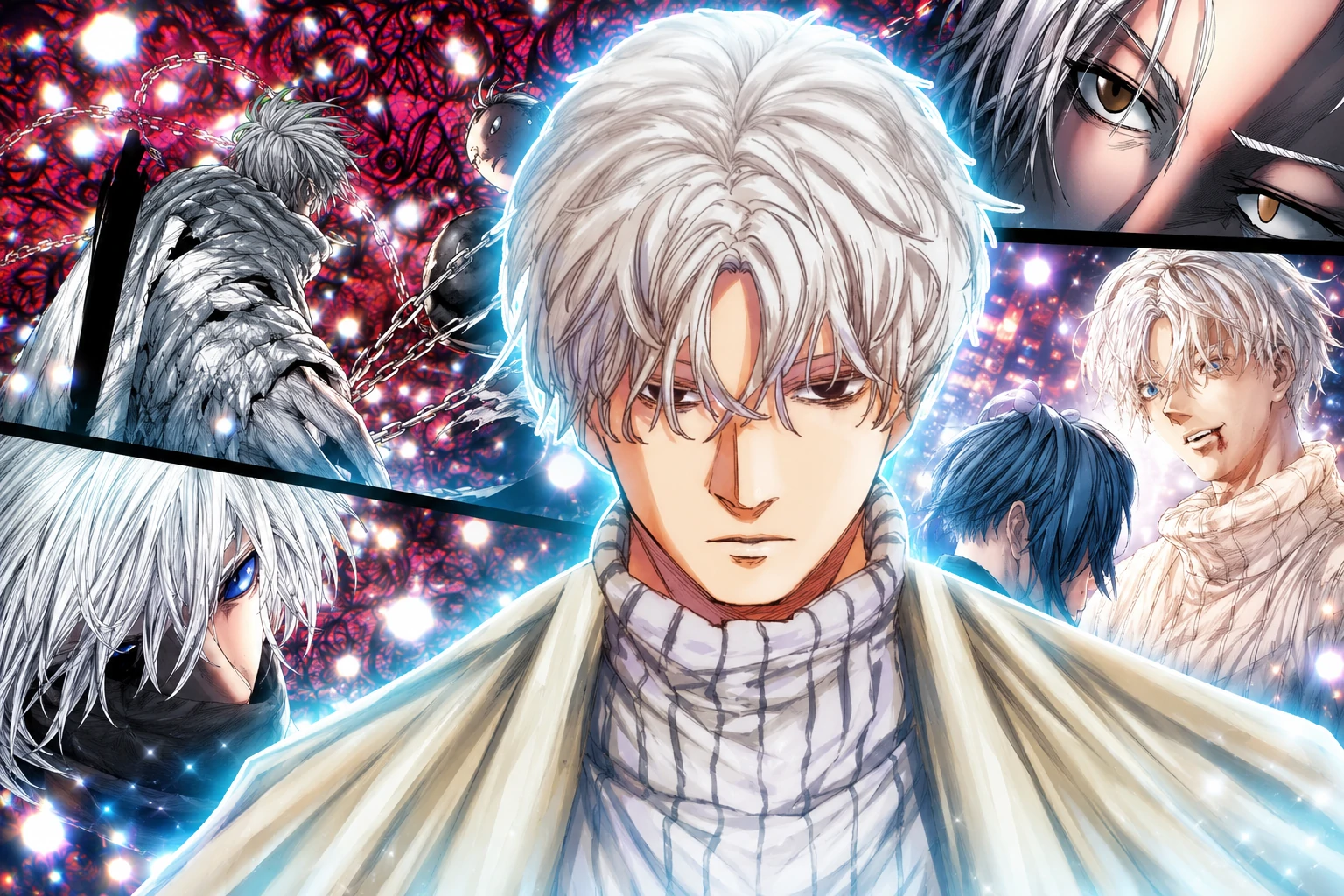
1. Who Is Kei Uzuki in Sakamoto Days?
Kei Uzuki is the primary antagonist of Sakamoto Days. He is also known by two names that carry more fear than his real identity: X and Slur.
He leads X’s Organization, a group formed around survivors of the Al-Kamar Orphanage and other assassins who share his desire to destroy the JAA. His goal is not merely revenge against one person. Uzuki believes the entire assassin system is corrupt, and he wants to tear it down so completely that a new order can rise from the ruins.
When Uzuki first enters the story, he appears calm, emotionless, and almost impossible to read. His crimes suggest a man without mercy. Around the same period that a one-billion-yen bounty was placed on Sakamoto, Uzuki’s campaign devastated the assassin industry and left an X drawn in blood at his crime scenes.
But the cold killer called Slur was not the person Uzuki began as.
2. From Al-Kamar Orphanage to the JCC
Uzuki grew up at the Al-Kamar Orphanage alongside Gaku, Kumanomi, Haruma, and other children who would later become central members of his organization.
Al-Kamar was not an ordinary orphanage. It was created by the JAA to train abandoned children as potential future members of the Order. The children Uzuki considered family were raised inside a system that viewed them as weapons before they were old enough to choose a life for themselves.
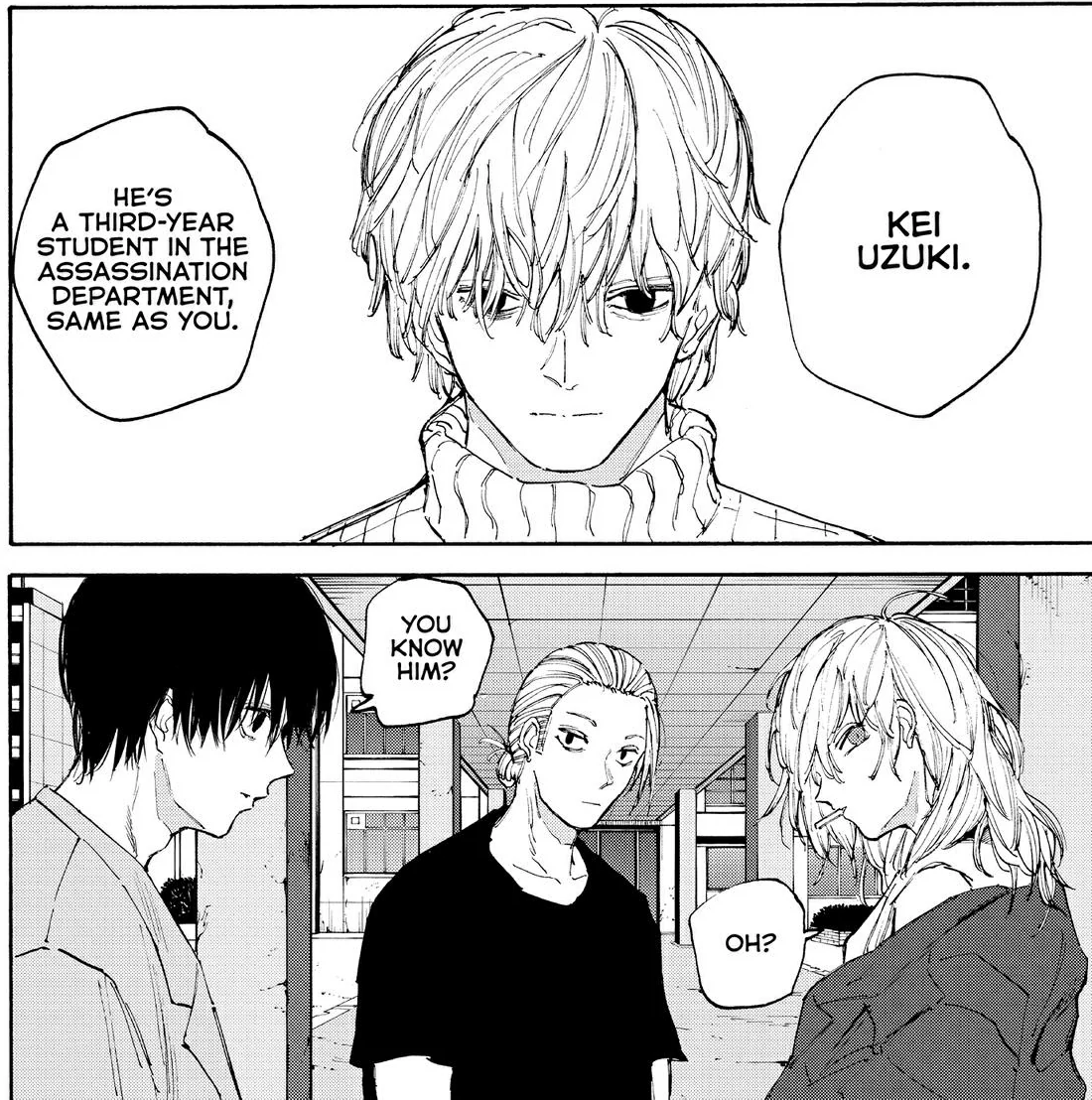
Uzuki later entered the JCC at the age of fourteen. Unlike Taro Sakamoto, Yoichi Nagumo, and Rion Akao—the chaotic elite whose talents constantly drew attention—Uzuki was quiet, withdrawn, and easy to overlook.
He was not initially ambitious. He did not seek recognition, power, or a place among the strongest assassins. In fact, his original beliefs were almost incompatible with the world around him. Uzuki believed killing was wrong. He struggled with the idea that another person’s life should be exchanged for his own happiness.
Everything changed during his third year at the JCC, when he was assigned to the same team as Sakamoto, Nagumo, and Rion.
3. The Mission That Changed Everything
The four students were first sent to eliminate the assassin known as the Steel Dragon. Their supposed target was eventually revealed to be Kindaka, the leader of the Order, who had been testing their ability.
Kindaka then assigned them a protection mission involving the wife and daughter of the JAA chairman. What should have been the beginning of a powerful new team became the event that broke Uzuki’s life apart.
During the mission, the group was poisoned by Kobayashi. After the enemy was defeated, only a limited amount of antidote remained.
At that exact moment, Sei Asaki contacted Uzuki. Asaki used Gaku’s life and the safety of the other Al-Kamar children as leverage, ordering Uzuki to ensure Kindaka’s death.
Uzuki remembered Rion’s belief that she would kill anything—even her own heart—if it meant protecting the people she loved. Unable to kill Kindaka directly, Uzuki chose to drop the final antidote, intending to condemn both Kindaka and himself.
Kindaka saw what happened. He caught the medicine and injected Uzuki instead, sacrificing himself.
Rion witnessed the act and initially pursued Uzuki as he fled. Once he finally revealed why he had betrayed the mission, she chose to believe him. She turned against the assassins hunting them and disappeared with Uzuki for more than a year.
Rion’s decision is the emotional center of Uzuki’s tragedy. She did not excuse what he had done. She recognized the prisoner beneath the crime—and became the only person who reached toward him instead of judging him from a distance.
4. Rion Akao’s Death and the Birth of Slur
While living in hiding, Uzuki and Rion became deeply connected. They shared stories about their pasts, argued over ordinary choices, and imagined a future in which the children at Al-Kamar could finally be free.
That future never arrived.
Asaki located Uzuki and offered him one final deal: assassinate a highly skilled killer, and the children at Al-Kamar would be released. Uzuki accepted because he wanted to protect his family, end Rion’s dangerous work, and build a life in which none of them had to keep running.
Asaki had designed the mission as a trap.
The target was Rion.
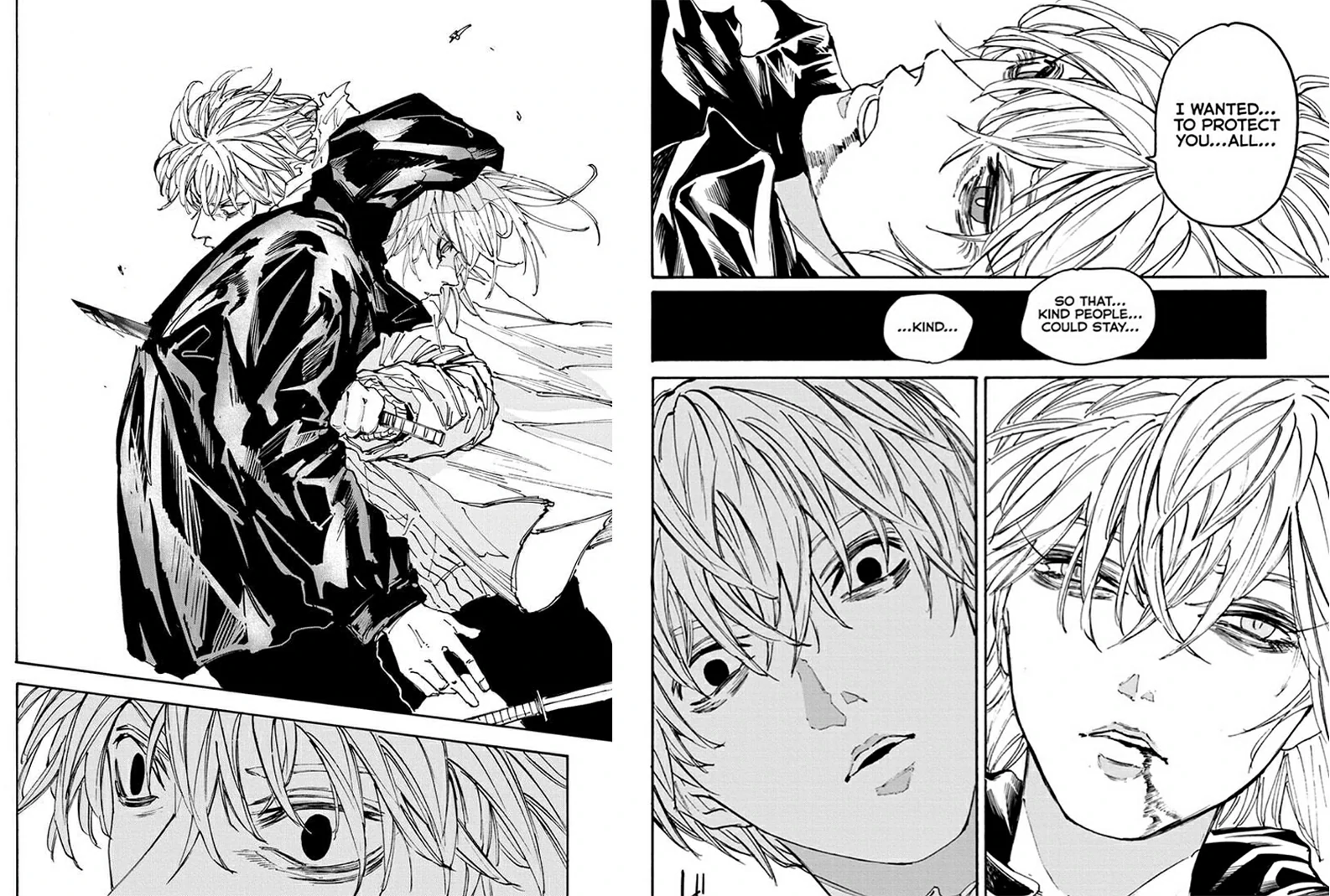
Uzuki attacked before he understood who stood in front of him. By the time he recognized her, his own hand had already delivered the fatal wound. Rion died in his arms after telling him that she wanted kind people to remain kind.
The person who had understood him better than anyone was gone because he had trusted the man who controlled his life.
Uzuki did not simply lose Rion. He became the weapon that killed her—and that guilt destroyed the person he had once tried to be.
Sakamoto arrived soon afterward. Uzuki accepted responsibility and refused to explain himself, convinced that Sakamoto would never understand. Sakamoto defeated him and fired what should have been a fatal shot.
Uzuki survived because of situs inversus, a rare condition in which his major internal organs are mirrored from their usual positions. The bullet struck where a vital organ should have been, but not where Uzuki’s organ actually was.
After crawling back into the world and receiving no help from the people who watched him suffer, Uzuki turned his back on society. He returned to Al-Kamar, massacred thirty-four people, rescued Gaku and the other children, and burned the orphanage down.
From that moment, Kei Uzuki began transforming into Slur.
5. Kei Uzuki’s Appearance and Contradictory Personality
Uzuki has a slender build, medium-length white hair, and blue eyes that are often hidden beneath his long fringe. His usual outfit is simple but distinctive: a light gray turtleneck, a long coat reaching below the knees, black trousers, and formal shoes.
The restrained design fits his personality. Uzuki rarely needs exaggerated movement or loud emotion to feel threatening. His stillness creates distance. His unreadable expression makes it difficult to know which version of him is about to speak.
The Cold Leader Called Slur
As Slur, Uzuki can be calculating, merciless, and willing to eliminate anyone who obstructs his campaign against the JAA. His assault on the organization produced 176 deaths, three injuries, and one missing person. The wider conflict reduced Japan’s professional assassin population to one-quarter of its former size.
Those numbers establish the scale of his threat. Uzuki is not merely a strong individual. He is capable of destabilizing an entire industry.
The Brother Who Still Cares
Yet his cruelty does not erase his attachment to the people he calls family.
Uzuki cares deeply for Gaku and once considered sacrificing himself to protect the Al-Kamar children. He showed remorse over Uda’s self-sacrifice. He was visibly shaken when Haruma protected him and was killed by Takamura. Kumanomi also acknowledged that Uzuki had never treated the group badly.
Around strangers, he appears like a cold-blooded killer. Around the people he loves, a softer and more vulnerable personality emerges.
That contradiction is not a minor detail. It is the core of his character. Uzuki became a monster while trying to protect the only people who ever felt like home.
6. How Strong Is Kei Uzuki?
Kei Uzuki is among the strongest assassins in Sakamoto Days. His organization caused enough destruction that the Order itself had to intervene, but his individual strength is just as dangerous as the movement he commands.
Exceptional Combat Perception
Uzuki is not dependent on raw power. He reads the battlefield, predicts movement, and uses surrounding objects to compensate when an opponent’s speed becomes too great for the eye to follow.
Kindaka recognized both Uzuki’s sharp spatial awareness and his lack of hesitation under pressure. Even as a student, Uzuki was willing to move directly into Kindaka’s attack path and calculate how to stop him.
Speed, Reflexes, and Endurance
Uzuki can appear behind skilled opponents before they notice him. He stabbed an out-of-shape Sakamoto in the abdomen before the legendary assassin could react, and his weapon moved so quickly that Sakamoto did not fully register the attack until afterward.
He can also keep pace with Sakamoto during close combat and survive punishment that would incapacitate most assassins. His slender frame is misleading: Uzuki combines speed, flexibility, endurance, and extraordinary pain tolerance.
The Sword-Whip
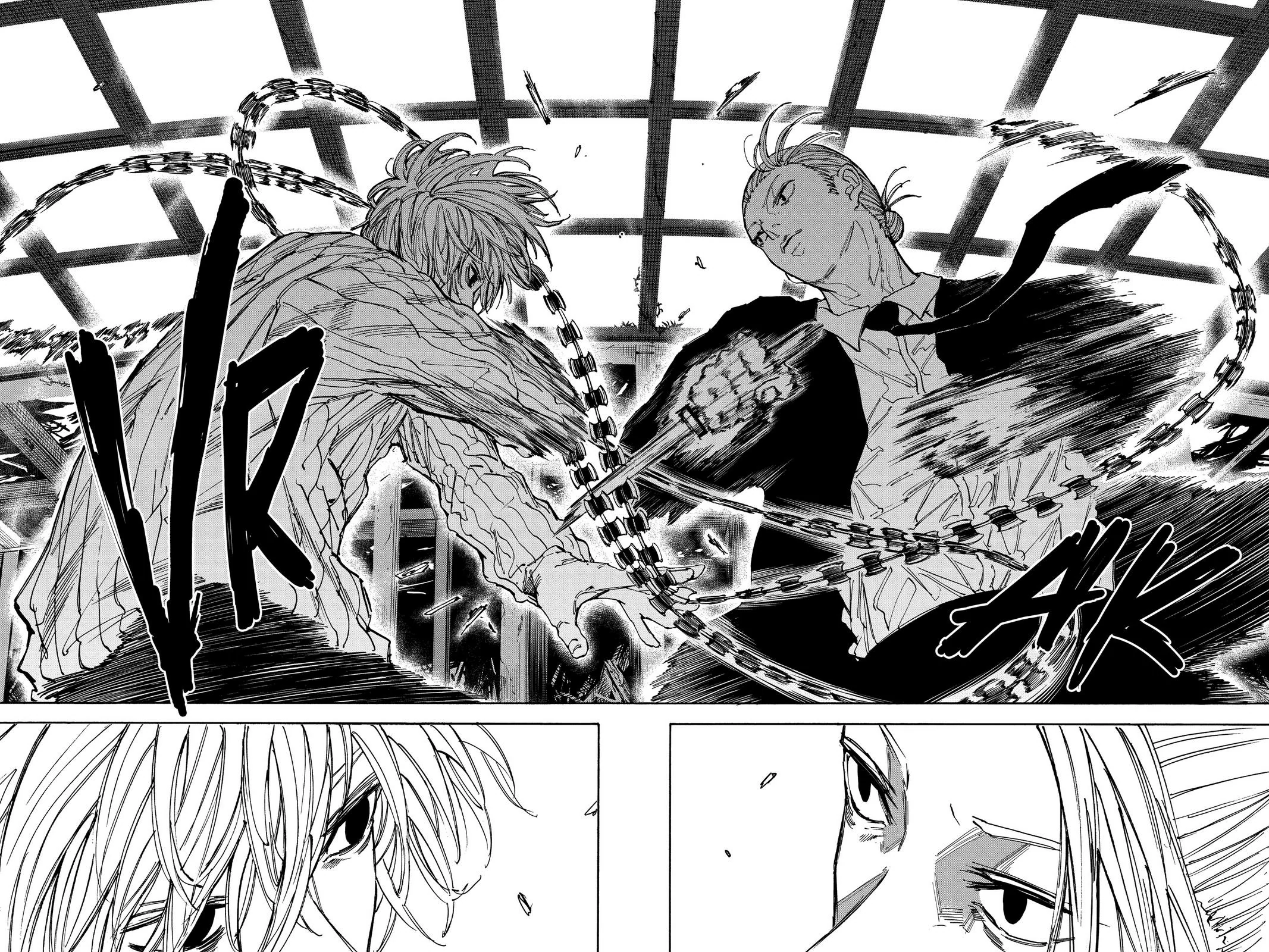
Uzuki’s signature weapon is a segmented sword-whip made from multiple metallic blades. It allows him to attack from a distance, change direction unpredictably, and threaten opponents at close range without surrendering reach.
The weapon is difficult to track because each section changes the path of the strike. In Uzuki’s hands, it becomes less like a conventional blade and more like a moving field of knives.
Situs Inversus
Uzuki’s mirrored organ placement does not make him stronger in a normal fight, but it has repeatedly made accurate killing blows fail. Sakamoto and Nagumo targeted locations that would normally be fatal, only to discover that Uzuki’s vital organs were elsewhere.
It is not regeneration or immortality. It is an anatomical exception that becomes devastating when even elite assassins rely on precise knowledge of the human body.
Overall assessment: Base Uzuki is already an elite assassin with high speed, battle intelligence, lethal weapon control, and unusual survivability. His alternate personas then expand that foundation into something far more dangerous.
7. Uzuki’s Multiple Personas: Rion and Takamura
The manga identifies Uzuki as having dissociative identity disorder caused by overwhelming trauma. Within the fictional rules of Sakamoto Days, his mind can create personas based on people connected to extreme stress.
Important context: The skill-copying effect is a fictional supernaturalization of the condition. It should not be treated as a real-world clinical description of dissociative identity disorder.
Uzuki does not merely imitate speech or posture. His personas reproduce mannerisms, memories, instincts, and even combat abilities with frightening accuracy. They can persist after the original person has died.
The Rion Akao Persona
Rion’s persona reflects the woman Uzuki lost. Her movement, rhythm, attacking style, and casual personality are so accurate that Sakamoto and Nagumo struggle to separate the copy from the friend they once knew.
The persona was formed to protect Uzuki, but it is not identical to the living Rion. It exists inside his mind as both a shield and a wound that never closes.
The Takamura Persona
The Takamura persona is the most terrifying expression of Uzuki’s ability.
Takamura was the Order’s most overwhelming swordsman—a figure powerful enough to dominate Sakamoto, Nagumo, Gaku, Haruma, and Uzuki in the same confrontation. After Haruma was killed and the others were pushed to the edge of death, Uzuki’s mind created a persona based on Takamura.
His posture changed. His eyes turned white. He began muttering like the original swordsman. More importantly, he reproduced Takamura’s katana technique despite never previously displaying comparable swordsmanship.
Uzuki stole Takamura’s blade, matched his attacks, and cut him down.
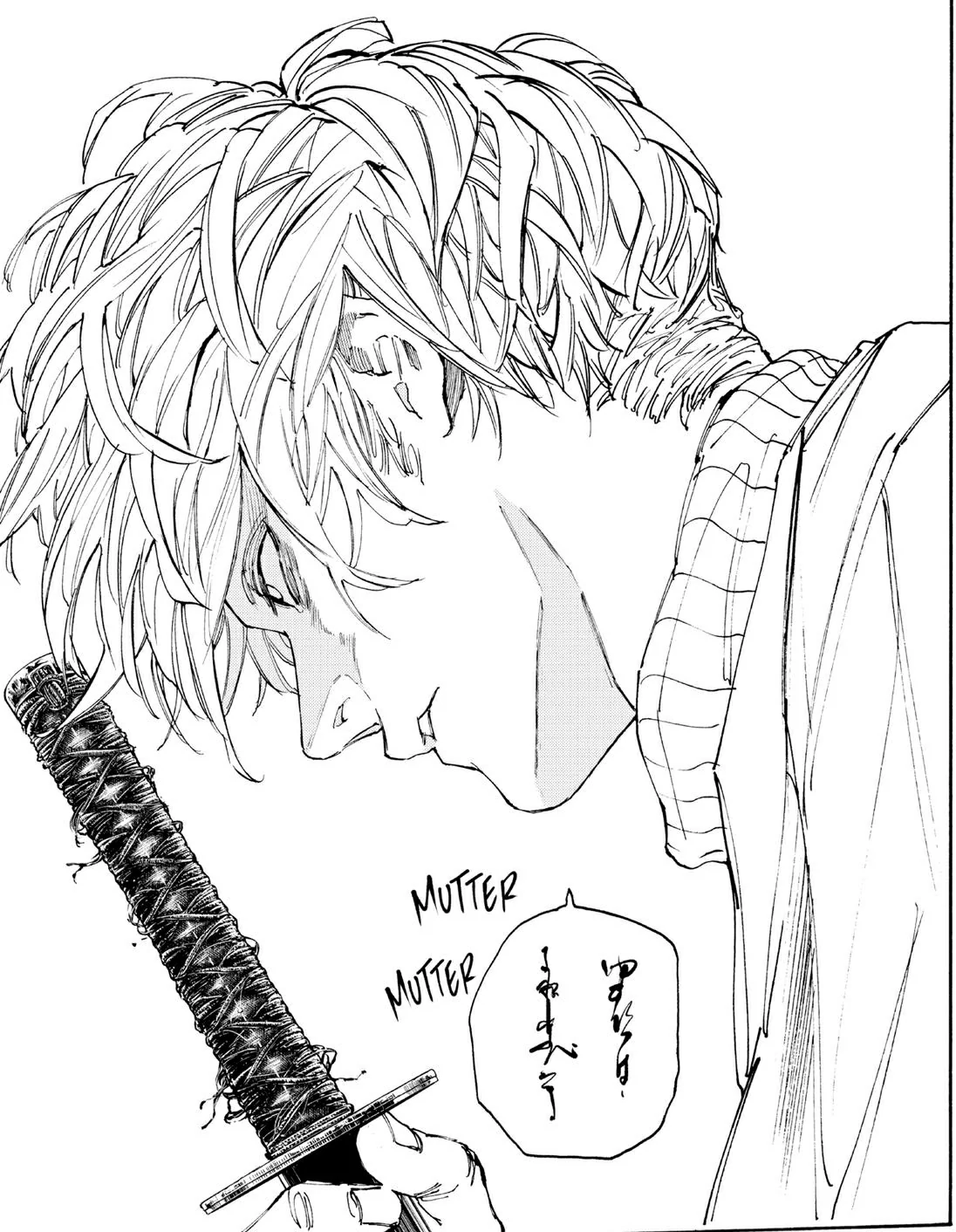
The result is frightening for one simple reason: Takamura’s experience and technique are now being expressed through Uzuki’s younger body.
Uzuki already possessed speed, endurance, and combat awareness. The Takamura persona adds master-level swordsmanship and an instinctive response to killing intent. It is effectively the skill of an old monster placed inside a healthier and more adaptable vessel.
8. Why Kei Uzuki Is More Dangerous Than a Normal Final Villain
Uzuki is not terrifying because he is evil without reason. He is terrifying because every part of his strength developed from an attempt to survive.
- Al-Kamar taught him that institutions could turn children into tools.
- Asaki taught him that love could be used as leverage.
- Kindaka’s sacrifice taught him that his choices could kill innocent people.
- Rion’s death taught him that even hope could become a trap.
- Sakamoto’s bullet taught him that survival did not guarantee rescue.
- His personas turned trauma into new identities and new combat abilities.
Most powerful enemies become easier to understand once their technique is revealed. Uzuki becomes harder to predict the more we learn about him.
His body can invalidate a perfect killing strike. His sword-whip changes range and direction. His strategic mind reads the environment. His personalities can alter how he thinks, moves, and fights. The opponent standing in front of Sakamoto may be Uzuki, Rion, Takamura, or another identity that has not yet fully emerged.
That uncertainty is his greatest weapon.