
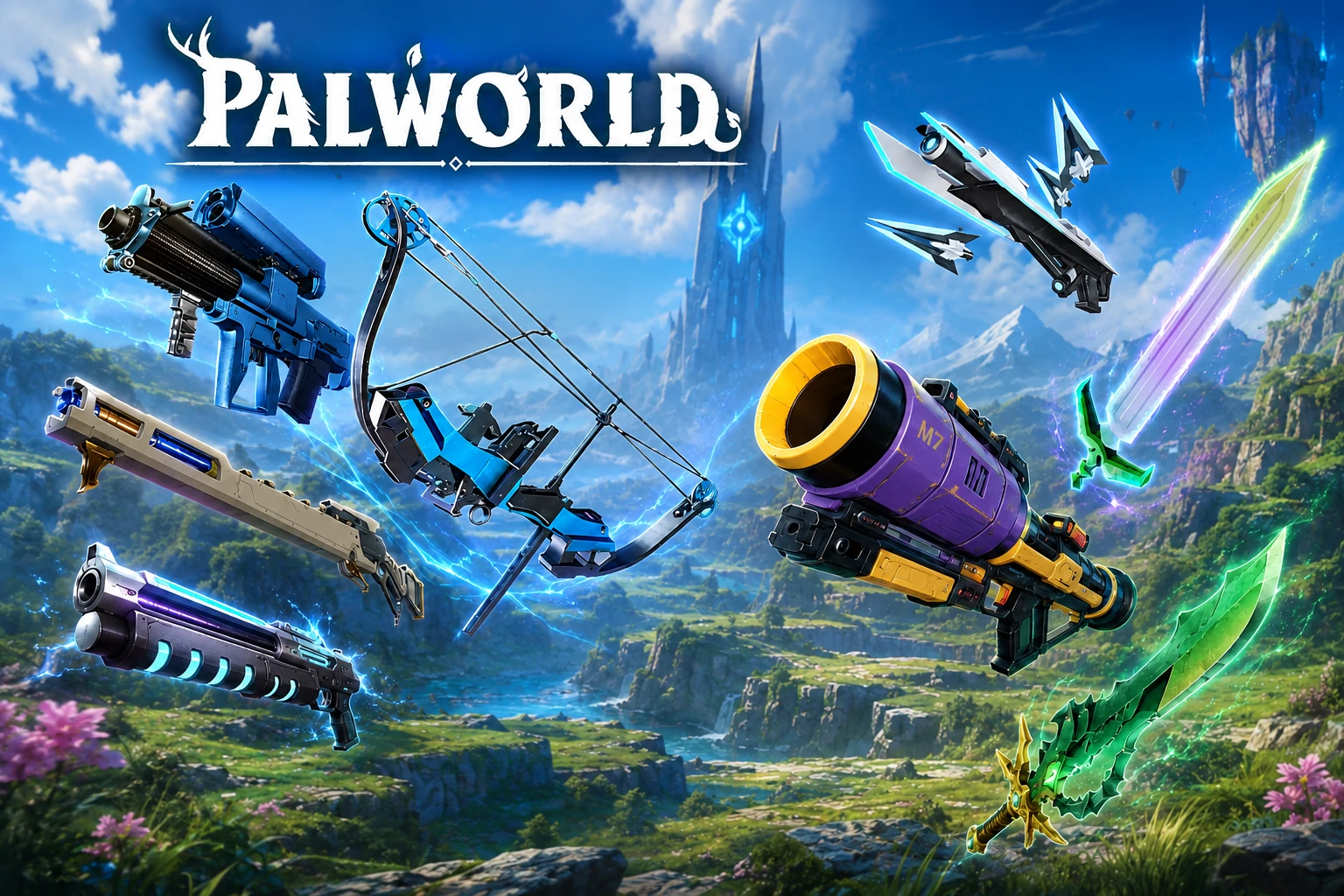
Palworld 1.0 has completely changed the weapon conversation. Raw attack power still matters, but the best weapon is no longer simply the gun with the biggest number on the Technology screen. Ammo economy, unlock timing, range, reload rhythm, status effects, Pal synergy, schematic accessibility and real combat uptime all decide whether a weapon is genuinely powerful or merely impressive on paper.
After comparing the 20 most relevant weapons highlighted in the supplied gameplay testing, this ranking focuses on what actually helps a player progress: weapons that solve difficult fights efficiently, remain useful for multiple level brackets and justify the resources required to maintain them.
How We Ranked the Best Weapons in Palworld 1.0
A weapon tier list built only around theoretical damage per second is misleading. The highest-DPS tool can still be a poor recommendation if its ammunition demands constant manual farming, its legendary schematic appears too late, or its reload pattern leaves the player exposed during every serious boss fight.
Each weapon in this ranking was judged across six practical categories:
- Real combat damage: sustained output after reloads, recovery windows and missed shots.
- Ammo economy: how easily the required ammunition can be produced in large quantities.
- Progression value: how early the weapon becomes available and how long it stays useful.
- Range and control: accuracy, area damage, status application and safety at different distances.
- Build synergy: whether Pal partner skills or elemental setups meaningfully improve performance.
- Schematic accessibility: how realistic it is to obtain a rare, epic or legendary version.
Palworld officially left Early Access with version 1.0 on July 9, 2026. The release expanded the endgame and added new technology options including the Mechanical Bow, Tactical Grenade Launcher, Laser Sword and Drone Launcher. That larger arsenal is exactly why older favorites must now be evaluated by role rather than nostalgia.
Palworld 1.0 Weapon Tier List at a Glance
| Tier | Weapons | Best use |
|---|---|---|
| S+ | Mechanical Bow, Tactical Grenade Launcher, Drone Launcher | Endgame builds, boss damage and battlefield control |
| S | Terraprisma, Skutlass, Pump-Action Shotgun, Charge Rifle | High-impact specialist builds and reliable late-game combat |
| A | Three Shot Bow, Vortex Beater, Laser Rifle, Meteor Launcher, Terra Blade | Strong progression, utility and efficient farming |
| B | Semi-Auto Rifle, Makeshift Shotgun, Old Revolver, Handgun, Rocket Launcher | Early-to-mid-game value and dependable sidearm roles |
| C+ | Laser Sword, Semi-Auto Shotgun, Single-Shot Rifle | Viable, stylish or situational, but usually outperformed |
20 Best Weapons in Palworld 1.0 Ranked
#20Single-Shot Rifle
The Single-Shot Rifle is satisfying in the same way an old hunting rifle is satisfying: every pull of the trigger feels deliberate. A strong schematic can give it respectable burst damage, and precise players can make headshots count. The problem is that its entire combat rhythm is built around one shot followed by a reload.
That downtime becomes increasingly painful when enemies are faster, raids are crowded or bosses punish hesitation. It is not a bad weapon; it is simply a weapon that gets overtaken quickly. Once the Semi-Auto Rifle enters the picture, most players gain better sustained pressure without sacrificing the accurate mid-range style they already enjoy.

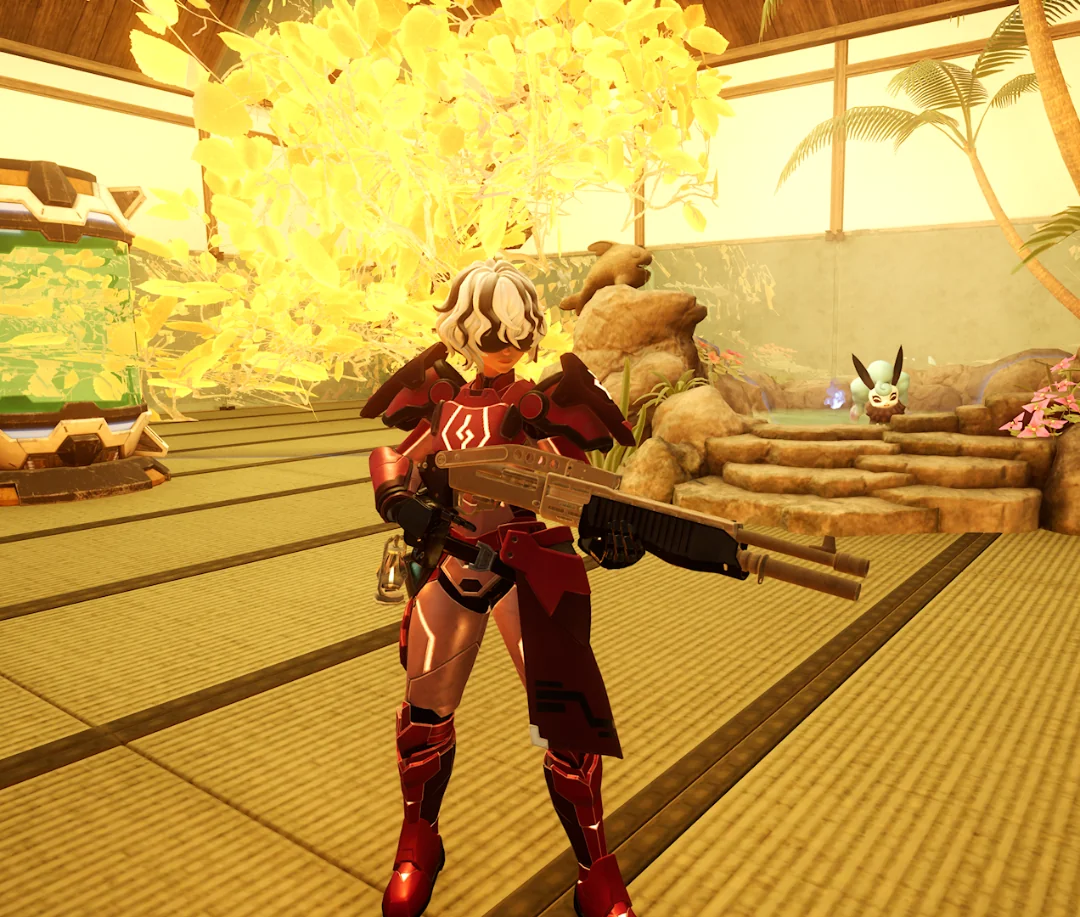
#19Semi-Auto Shotgun
The Semi-Auto Shotgun looks like an endgame monster, and its fast follow-up shots make it excellent for players who value aggressive momentum. It can erase mistakes at close range because a missed pellet spread can be corrected almost immediately with another blast.
However, the weapon pays for that comfort with weaker efficiency than the Pump-Action Shotgun. When both weapons are compared at similar rarity, the pump variant generally offers a better combination of damage, ammo conservation and realistic acquisition. The Semi-Auto Shotgun remains fun, stylish and completely usable, but it rarely becomes the most efficient answer.
#18Laser Sword
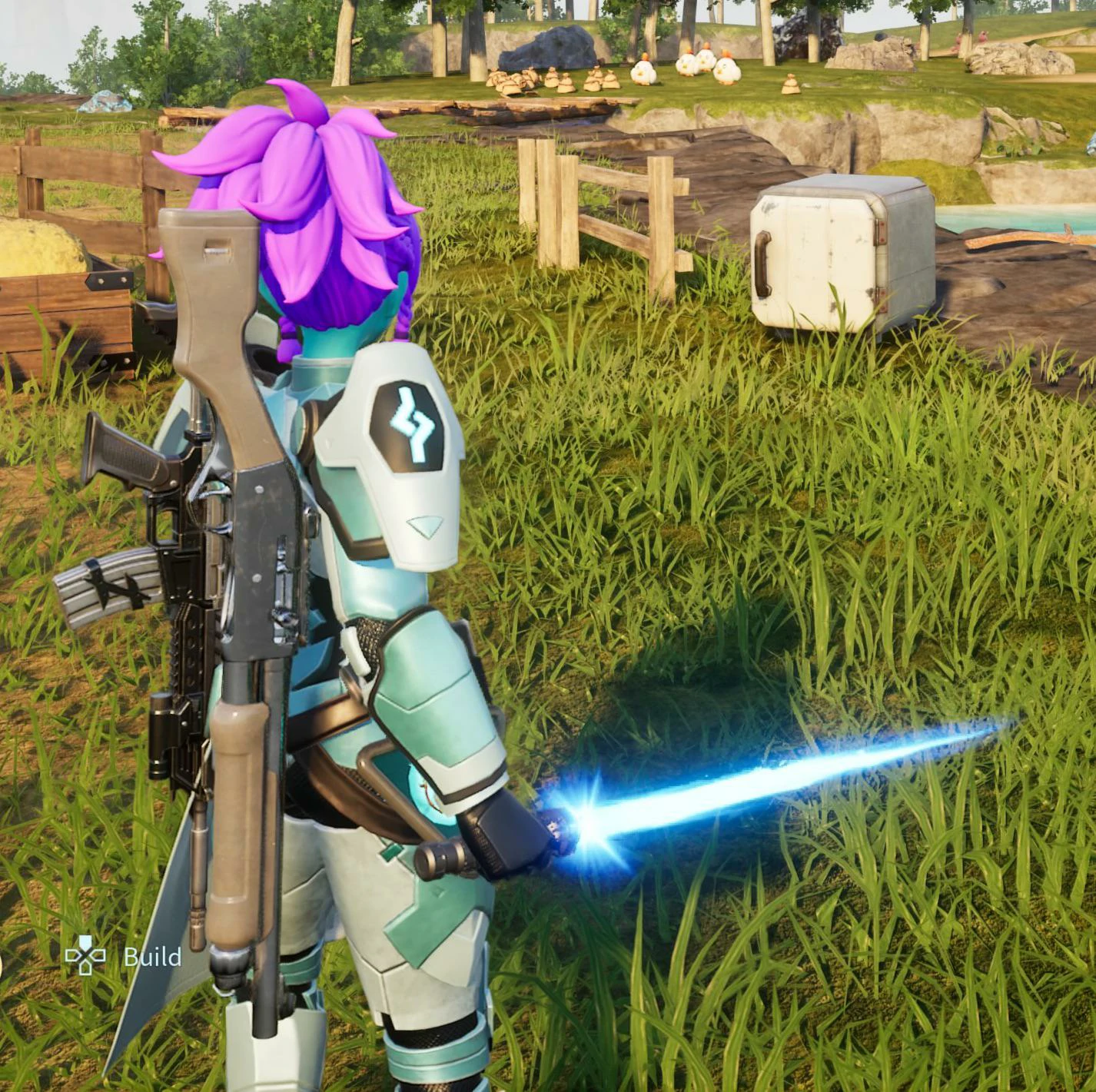
The Laser Sword is a clean, high-tech melee option introduced into the expanded 1.0 arsenal. It has strong visual impact, immediate attacks and none of the temporary transformation rules attached to Skutlass. For players who simply want a conventional melee weapon that behaves consistently, that reliability is valuable.
Its weakness is opportunity cost. Palworld’s most dangerous fights heavily reward range, mobility and attacks that continue working while the player repositions. The Laser Sword can hit hard, but closing the gap against high-level targets exposes the player to attacks that a bow, rifle or launcher could avoid entirely. It is a good weapon in a game where several alternatives are safer and more flexible.
#17Rocket Launcher
The Rocket Launcher remains one of Palworld’s most recognizable heavy weapons. A legendary version delivers massive area damage and can flatten clustered enemies in a single well-placed shot. Its explosion radius also makes it forgiving when perfect accuracy is not possible.
The issue is progression. Obtaining the best version has traditionally required farming one of the game’s most dangerous Alpha Pals, while newer launchers can offer easier ammunition loops or more flexible firing patterns. The single-shot magazine and long reload also make every miss expensive. It is still devastating, but Palworld 1.0 now contains more practical ways to create explosive pressure.

#16Handgun
The Handgun is not designed to dominate a damage chart. Its job is to be ready. It draws quickly, handles smoothly, uses manageable ammunition and gives the player a dependable answer when a heavier weapon is reloading or would be wasteful.
That consistency makes it one of the best true sidearms in the game. A good schematic can keep it relevant longer than expected, especially for players who value accurate weak-point shots. It ranks below more specialized weapons because its ceiling is limited, but very few weapons feel this comfortable during ordinary exploration.

#15Old Revolver
The Old Revolver trades the Handgun’s smooth rhythm for heavier bursts. It rewards confident aim, and an upgraded schematic can create a dramatic jump in performance. When a player wants a sidearm that feels powerful instead of merely convenient, the Revolver is the more satisfying choice.
The longer reload is the price. In extended combat, the Handgun’s steadier cadence can be safer, while the Revolver asks the player to create space before reloading. The two weapons are close enough that personal preference matters more than any universal rule: choose the Revolver for punch, or the Handgun for flow.

#14Makeshift Shotgun
The Makeshift Shotgun is one of the clearest examples of why attack numbers do not tell the full story. Its listed damage is applied through multiple pellets, which means a close-range blast can produce exceptional damage for the amount of ammunition consumed.
Its range is terrible, and that limitation is real. To unlock the weapon’s value, the player must get close enough for most pellets to connect with a weak point or large target. Against slow Alphas, confined dungeon enemies and predictable bosses, that trade is often worth it. For early and mid-game resource efficiency, very few firearms compete.

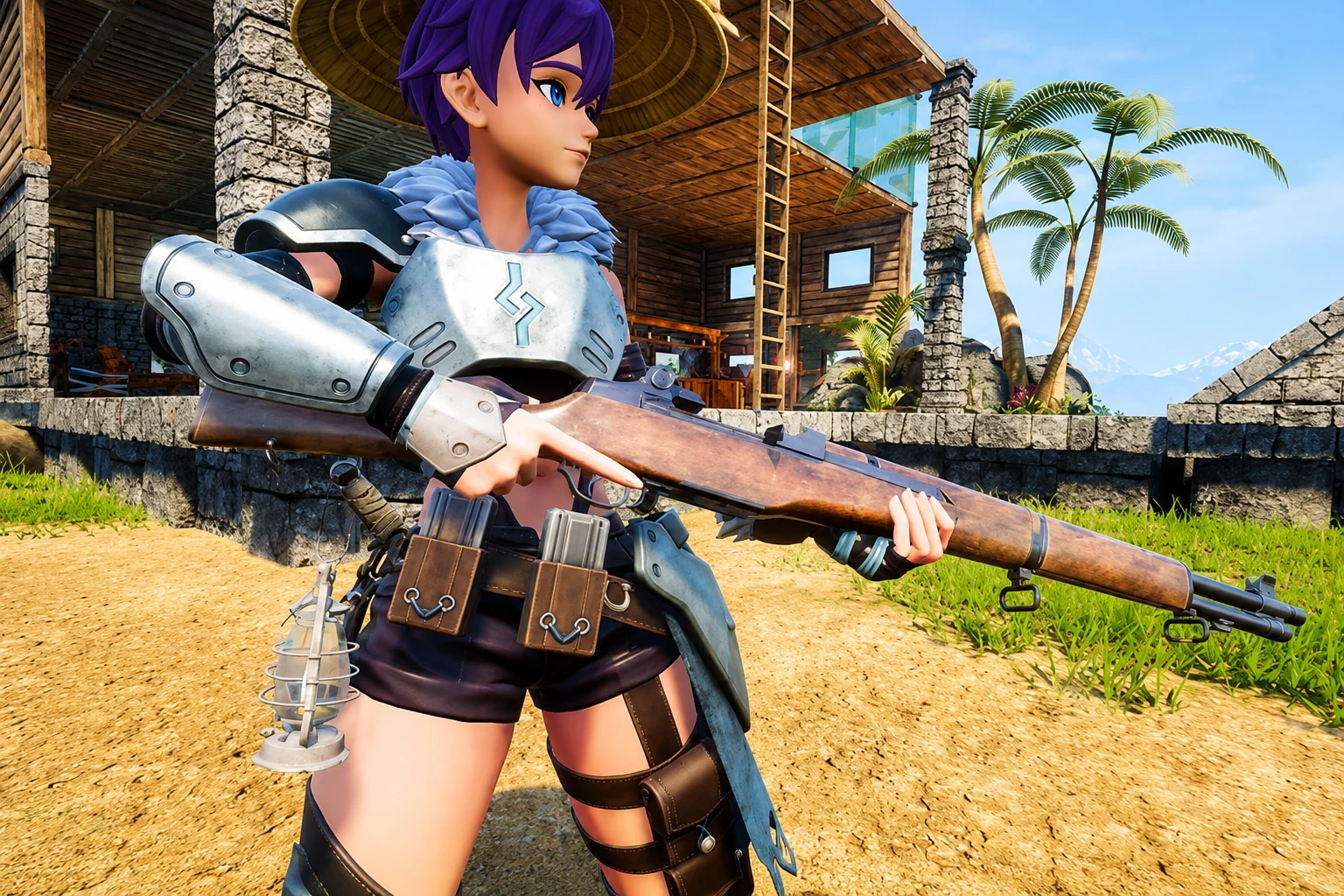
#13Semi-Auto Rifle
The Semi-Auto Rifle is one of the strongest progression weapons because it arrives at exactly the right time. It offers accurate follow-up shots, useful range and enough mobility to handle open-world battles without the clumsy rhythm of the Single-Shot Rifle.
Compared with weapons unlocked around the same stage, it feels unusually complete. Its ammunition is manageable, its fire rate is fast enough to punish openings and its recoil does not turn every encounter into a spray-and-pray contest. It may not survive as a final endgame weapon, but it can carry a character through a large portion of the mid-game with almost no frustration.
#12Terra Blade
The Terra Blade earns its place by combining melee classification with ranged energy waves. That hybrid identity lets it benefit from melee-focused support while still attacking enemies that would be awkward or dangerous to approach directly.
It is particularly useful in dungeons and narrow environments, where its projectiles can pressure targets through constrained spaces. It also brings something many high-tier guns lack: low-maintenance fun. The Terra Blade is not the best raw damage option in 1.0, but it supports an active combat style without demanding a constant ammunition economy.

#11Meteor Launcher
The Meteor Launcher is a sleeper pick because its value changes dramatically with rarity. The standard version can feel ordinary, while a top schematic transforms it into a much more serious explosive weapon. Its greatest advantage is not merely damage; it is ammunition comfort.
Players who accumulate meteorite materials through normal exploration can maintain a large rocket stockpile without restructuring their entire base economy. That makes the Meteor Launcher easier to use freely than weapons whose ammunition depends on rarer late-game materials. It may lose a direct damage contest to a legendary Rocket Launcher, but it wins many practical comparisons through accessibility and uptime.
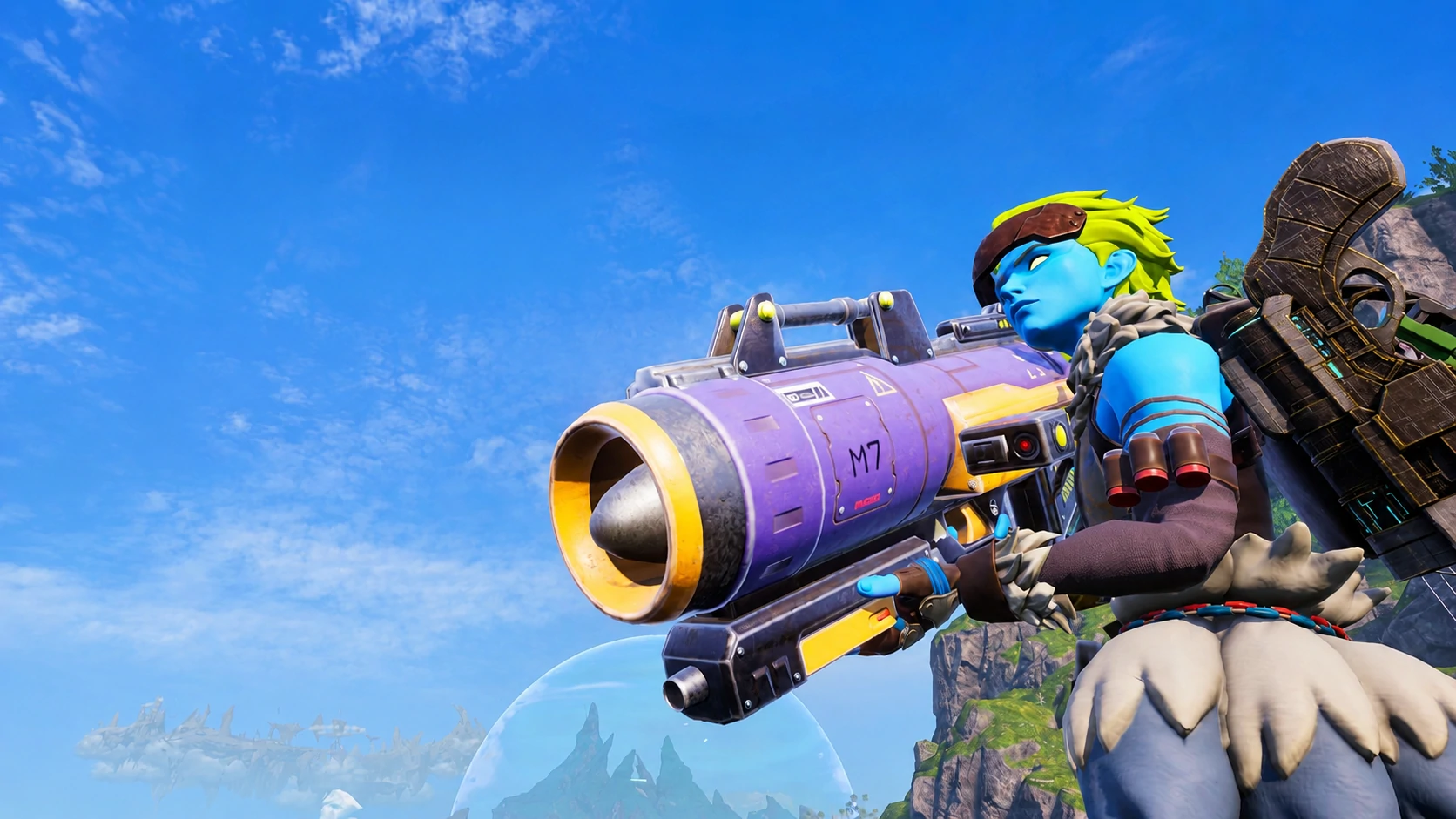
#10Laser Rifle
The Laser Rifle is the natural evolution of the Semi-Auto Rifle. It has excellent accuracy, strong range, a generous magazine and reliable weak-point damage. It does not need a complicated strategy; point it at the correct target and maintain pressure.
Its theoretical DPS is not the highest in its level bracket, but real fights reward consistency. The Laser Rifle loses less damage to missed shots than many faster weapons and lets the player remain effective at distances where shotguns and melee builds cannot function. An epic version is enough to bridge the gap into the highest-level 1.0 gear, making it one of the safest investments for a general-purpose loadout.
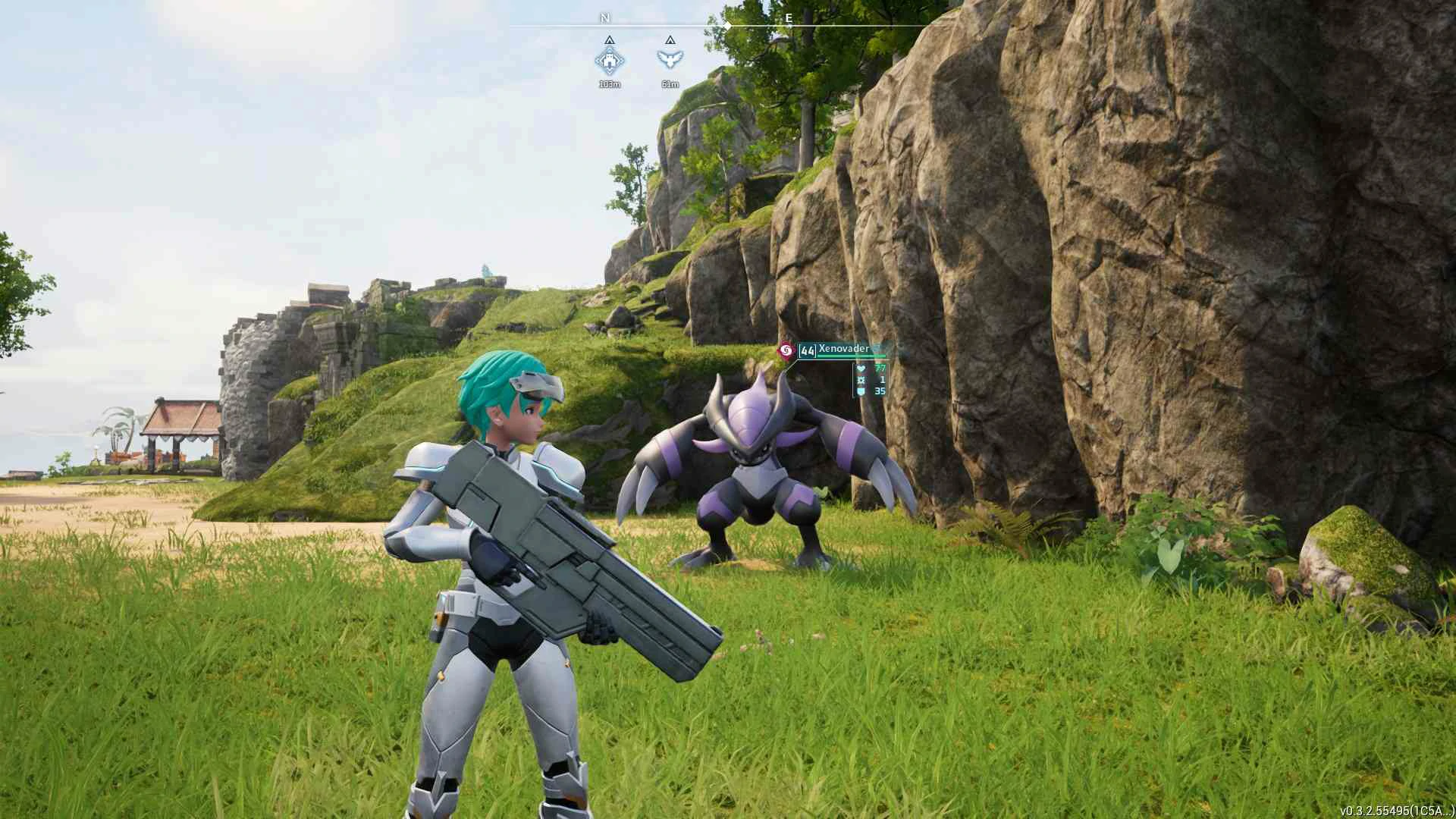
#9Vortex Beater
The Vortex Beater is one of the strongest rewards connected to the Tides of Terraria content. It delivers rapid automatic fire and can outperform several weapons that appear later on the normal technology curve. That early access to high sustained damage is what makes it feel secretly broken.
A rare or epic version obtained while a character is still in the mid-level range can completely change progression. Instead of crafting and replacing several temporary weapons, the player gains a firearm capable of handling content well above its apparent tier. Its main limitation is acquisition: farming the relevant dungeon content demands preparation and route knowledge.

#8Three Shot Bow
The Three Shot Bow looks modest beside futuristic rifles and launchers, but it remains one of the smartest utility weapons in Palworld 1.0. Its strength comes from status application. Fire and poison can remove health independently of the bow’s direct hit, letting a cheap early weapon contribute against enemies far above its normal level range.
When combined with Pals that improve elemental pressure or reduce enemy output, one accurate volley can begin a damage-over-time cycle while the player switches to another weapon. This makes the bow less of a primary DPS tool and more of a powerful opener. It is inexpensive, accessible and still useful deep into the game because status effects scale through utility rather than weapon rarity alone.

#7Charge Rifle
The Charge Rifle offers the long-range damage that the Laser Rifle eventually lacks. It rewards deliberate aim, distance management and patience. Against large bosses with readable attack patterns, charged weak-point hits can deliver excellent damage before the target is close enough to threaten the player.
The downside is tempo. Charging and lining up shots makes the weapon less comfortable against swarms or highly mobile targets. It also competes directly with the Mechanical Bow, which can achieve greater results when supported by the correct Pal team. The Charge Rifle is still an elite option for players who prefer a sniper-like style without committing their entire party to bow buffs.

#6Pump-Action Shotgun
The legendary Pump-Action Shotgun may be the best long-term value weapon in Palworld. It combines brutal close-range damage with reasonable ammunition costs and a schematic route that is more manageable than many endgame alternatives.
Its longevity is the key. A strong pump shotgun remains effective through multiple regions and boss tiers, often surviving in a loadout until the player reaches the resource-rich endgame where ammo cost no longer matters. The Semi-Auto Shotgun fires faster, but the Pump-Action’s damage efficiency and practical availability make it the better progression weapon.

#5Skutlass
The supplied transcript refers to this weapon-like Pal as “Cutless,” but the correct 1.0 name is Skutlass. Its partner skill temporarily transforms the Pal into a katana wielded by the player, creating some of the highest melee burst potential available.
That power comes with unusual costs. Skutlass occupies the active Pal role while functioning as the weapon, so the player temporarily loses the benefit of fighting beside a separate combat Pal. The transformation window and cooldown also force a hit-and-run rhythm. Used well, it is devastating: activate, dive into a safe opening, unload the strongest melee sequence possible, then disengage until the skill returns.
Skutlass ranks this high because the damage ceiling is real, not because it is comfortable. Players who dislike cooldown management will prefer the Laser Sword or Terra Blade. Players who enjoy timing boss openings can turn Skutlass into a genuine execution tool.

#4Terraprisma
Terraprisma remains one of Palworld’s most flexible weapons because it adds damage without demanding the player’s full attention. Activating it summons floating swords that automatically attack nearby enemies, creating pressure while the player uses a second weapon, dodges or manages a Pal.
This layered damage is more valuable than a simple attack stat suggests. Terraprisma can clear weak enemies, finish damaged targets and continue attacking through awkward terrain. It is also comparatively inexpensive to maintain, so players do not feel forced to save it for one special boss.
The Drone Launcher has surpassed it in raw endgame power, but Terraprisma remains the more economical version of the same idea. For long exploration sessions and dungeon farming, that efficiency keeps it in the top tier.
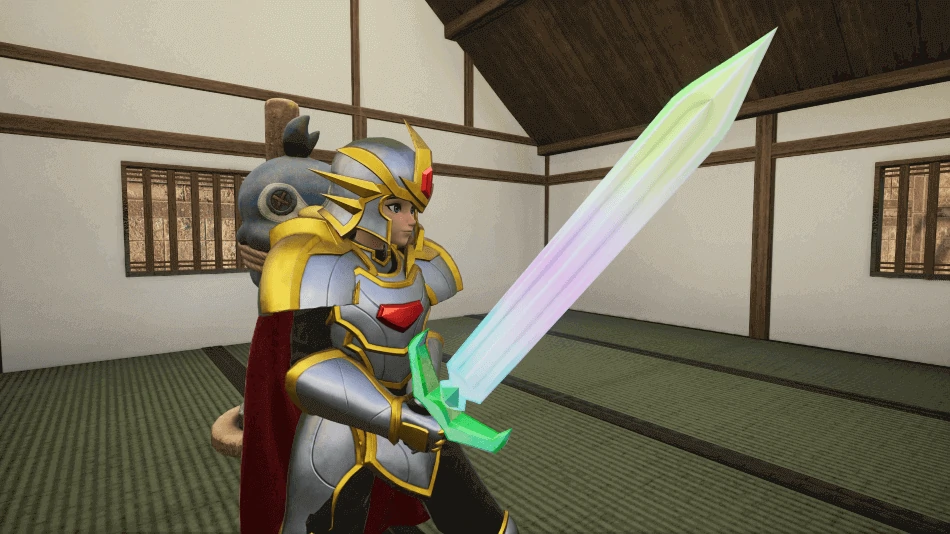
#3Drone Launcher
The Drone Launcher is effectively Terraprisma rebuilt for Palworld 1.0’s endgame. It deploys autonomous combat drones that seek targets and maintain battlefield pressure without requiring the player to aim every attack manually.
That independence creates enormous tactical value. Drones keep dealing damage while the player reloads, repositions, revives momentum after a dodge or focuses on a dangerous secondary target. They are especially strong in chaotic battles where conventional single-target weapons lose efficiency because the player is constantly forced to turn and reacquire enemies.
The drawback is cost. The Drone Launcher belongs to the Paloxite-tier endgame and demands rare materials, including resources tied to the new World Tree content. It is not a progression shortcut. It is a luxury weapon that becomes extraordinary once the player’s base economy can support it.
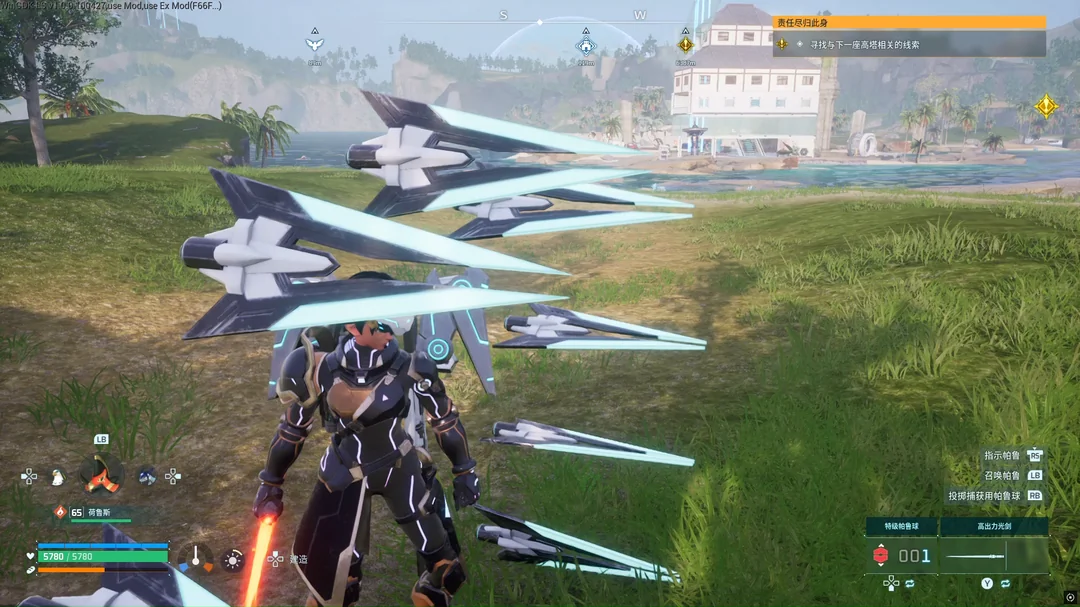
#2Tactical Grenade Launcher
The Tactical Grenade Launcher is the best practical explosive weapon for most endgame situations. It delivers heavy damage at a fast enough pace to keep groups staggered, delete clustered enemies and punish large bosses with repeated area hits.
Its real advantage is ammunition production. The launcher’s ammo relies on materials that can be integrated into a stable base economy more easily than several top-tier energy weapons. That means the player can actually use it instead of treating every shot like a rare consumable.
Against a single small target, a precision weapon can be more efficient. Against raids, dungeon groups and large enemies, the Tactical Grenade Launcher is brutally straightforward. Aim at the center of the problem and turn the entire area into damage.

#1Mechanical Bow
The Mechanical Bow is the best overall weapon in Palworld 1.0 because it combines elite damage, long range, weak-point accuracy and extraordinary Pal synergy. Even without a perfect schematic, it hits hard. With a fully committed bow team, it becomes the centerpiece of one of the strongest player-damage builds in the game.
Bow-supporting Pals can amplify its output, while flying-mount bonuses and consistent headshots push the build even further. Unlike novelty setups that are entertaining but unnecessary, the Mechanical Bow build creates a clear and repeatable advantage against serious endgame targets.
It also avoids one of the classic problems of heavy weapons: wasted overkill. A launcher can destroy groups, but the Mechanical Bow lets an experienced player place high damage exactly where it matters. It rewards skill, scales with team planning and remains effective across boss fights, exploration and high-level farming.

Best Palworld 1.0 Weapons by Progression Stage
Best early-game weapons
- Three Shot Bow: best status opener and one of the cheapest weapons with late-game utility.
- Makeshift Shotgun: exceptional damage per shell when fired at point-blank range.
- Handgun or Old Revolver: dependable sidearms that do not overconsume resources.
Best mid-game weapons
- Semi-Auto Rifle: the smoothest all-purpose progression gun.
- Vortex Beater: an early high-DPS prize for players prepared to farm Terraria content.
- Pump-Action Shotgun: the most reliable close-range investment for long-term progression.
- Meteor Launcher: accessible explosive damage with a comfortable ammo loop.
Best late-game weapons
- Mechanical Bow: best overall weapon with a dedicated build.
- Tactical Grenade Launcher: best for raids, groups and large targets.
- Drone Launcher: best autonomous damage layer.
- Terraprisma: best low-maintenance passive weapon before the Drone Launcher economy is ready.
- Charge Rifle: best conventional long-range option for players who do not want a bow team.
Why Legendary Schematics Matter More Than the Technology Tree
A common mistake is comparing only the standard versions shown in the Technology menu. Weapon rarity can produce a dramatic difference in attack and durability, and certain weapons improve far more than others when upgraded. A mediocre common weapon can become an excellent legendary weapon, while a strong base design may already perform well with only a rare or epic schematic.
For efficient progression, prioritize schematics that change your entire loadout rather than collecting every legendary blueprint:
- Pump-Action Shotgun: a high-value farm because it can remain useful for dozens of levels.
- Meteor Launcher: worth pursuing because higher rarity greatly improves its explosive role.
- Terraprisma and Vortex Beater: epic versions can already be strong enough to justify dungeon farming.
- Mechanical Bow: powerful even below legendary rarity, so the build does not need to wait for a perfect drop.
- Charge Rifle: legendary farming makes sense only for players committed to long-range precision combat.
Alpha breeding can reduce the frustration of schematic farming when the target Alpha is breedable. Increasing the chance that eggs hatch as Alpha variants creates more opportunities per breeding cycle, after which players can use the game’s normal capture and butchering systems to pursue drops. Dungeon and Oil Rig chests remain important for epic schematics, but repeated farming should be balanced against the time required to produce ammunition and improve the rest of the build.
Recommended Four-Weapon Loadouts
Efficient progression loadout
- Three Shot Bow for burn and poison application
- Semi-Auto Rifle for accurate general damage
- Pump-Action Shotgun for close-range burst
- Meteor Launcher for groups and emergency crowd control
Endgame boss loadout
- Mechanical Bow as the primary weak-point weapon
- Drone Launcher for autonomous pressure
- Tactical Grenade Launcher for adds and stagger
- Terraprisma or a sidearm for low-cost cleanup
Melee-focused loadout
- Skutlass for timed burst windows
- Terra Blade for ranged melee-class pressure
- Terraprisma for passive damage
- Laser Rifle for enemies that cannot be approached safely
Frequently Asked Questions
What is the best weapon in Palworld 1.0?
The Mechanical Bow is the best overall weapon when paired with a dedicated bow-support team. Without that investment, the Tactical Grenade Launcher is the strongest plug-and-play endgame option.
What is the best early-game weapon in Palworld 1.0?
The Three Shot Bow offers the best long-term utility because it can apply fire and poison. The Makeshift Shotgun is the better choice for immediate close-range damage per unit of ammunition.
Is the Pump-Action Shotgun better than the Semi-Auto Shotgun?
For most progression builds, yes. The Pump-Action Shotgun offers stronger damage efficiency and a more practical legendary schematic path. The Semi-Auto Shotgun is easier to use aggressively but consumes resources faster.
Is Terraprisma still worth using after Palworld 1.0?
Yes. The Drone Launcher is stronger, but Terraprisma remains cheaper to maintain and continues dealing autonomous damage while the player uses another weapon.
Do I need legendary schematics for the best Palworld weapons?
No. Legendary schematics can greatly improve performance, but weapons such as the Mechanical Bow and Vortex Beater can already be excellent at rare or epic quality. Farm the schematic that supports your main build instead of delaying progression for every legendary drop.
Final Thoughts
Palworld 1.0 rewards players who think about an arsenal as a system. The Three Shot Bow applies status effects, Terraprisma or the Drone Launcher adds autonomous damage, a rifle handles precise ranged pressure and a shotgun or launcher controls the moments when an enemy gets too close.
The Mechanical Bow deserves the number-one position because it has the highest combination of damage, range, skill expression and build synergy. Still, the most useful weapon for your save is the one your resource economy can support right now. A legendary Pump-Action Shotgun used freely is more valuable than a futuristic launcher whose ammunition is too expensive to fire.
Build around one primary weapon, keep one efficient backup and use the remaining slots to cover weaknesses. That approach will outperform a loadout filled with impressive weapons that all compete for the same materials and combat range.