
Akaza’s backstory is one of the most devastating character stories in Demon Slayer: Kimetsu no Yaiba.
As Upper Rank Three, Akaza appears to live for combat. He admires powerful opponents, despises weakness and pursues the “Supreme Territory” with an obsession so intense that even decapitation cannot immediately stop him.
Yet Akaza was not born with that philosophy.
Before he became a demon, he was Hakuji: a desperate son who stole to buy medicine for his father, a devoted student who found a second home in the Soryu Dojo, and a young man who promised to protect Koyuki for the rest of his life.
He failed to keep that promise—not because he lacked physical strength, but because tragedy repeatedly struck when strength alone could do nothing.
That contradiction became the center of Akaza’s existence. He spent more than a century seeking the power to protect what he had already lost, while his forgotten memories continued to shape his appearance, martial arts, Blood Demon Art and hatred of weakness.
Major spoiler warning: This article discusses Akaza’s complete human past as Hakuji, the deaths of his father, Keizo and Koyuki, his transformation by Muzan Kibutsuji, and the conclusion of his battle with Tanjiro Kamado and Giyu Tomioka in the Infinity Castle Arc.

Who Was Akaza Before He Became a Demon?
Long before he became Upper Rank Three, Akaza was a human boy named Hakuji who lived during the Edo period.
One symbolic reading of Hakuji’s name already contains a painful irony. The character 狛 appears in komainu, the guardian statues placed near the entrances of Shinto shrines, while 治 can suggest healing, governing or restoring order. Read this way, his name evokes a protector—someone who restrains chaos and guards others from harm.
Hakuji desperately wanted to become that person.
His life, however, repeatedly placed the people he loved beyond his protection.
He was reportedly born with fangs, and from childhood the people around him treated his abnormal strength as something frightening. By the age of eleven, his crimes and astonishing endurance had already earned him the label “Demon Child.”
That label misunderstood him. Hakuji was violent, defiant and willing to steal again even after brutal punishment, but his earliest crimes did not begin with greed. They began with a sick father and a child’s refusal to stand beside the bed doing nothing.
The central tragedy: Hakuji possessed extraordinary physical strength from childhood, yet every defining loss in his life taught him that strength had arrived too late—or had been useless against the real cause of his suffering.
Hakuji’s First Loss: The Father He Could Not Save
Hakuji lived alone with his chronically ill father, a man whose condition kept him confined to bed for most of the year. At only eleven years old, Hakuji began stealing because he needed money for medicine and nourishing food.
He was caught repeatedly.
The punishments were severe enough to leave an adult numb, yet Hakuji endured one hundred blows and still answered the threat of losing his hands with open defiance. Even without hands, he insisted, he could use his feet and continue pickpocketing.
That response reveals both sides of his character. Hakuji was almost superhumanly resilient, but he was also a child who had narrowed the entire world to one objective: keep his father alive.
His father could not bear the cost.
Rather than continue watching his son become a branded criminal for his sake, he took his own life. The decision was intended to free Hakuji from the cycle of theft and punishment, but it destroyed the purpose for which the boy had endured everything.
Hakuji had accepted pain because pain could be exchanged for medicine. Once his father was gone, the beatings, tattoos and crimes no longer had meaning.
Grief hardened into hatred. He turned against people, against the world and eventually against his own life. After being expelled from Edo with criminal tattoos marking his body, he continued attacking anyone who crossed his path.
He was no longer trying to save someone.
He was simply fighting because violence was the only sensation powerful enough to break through the emptiness.
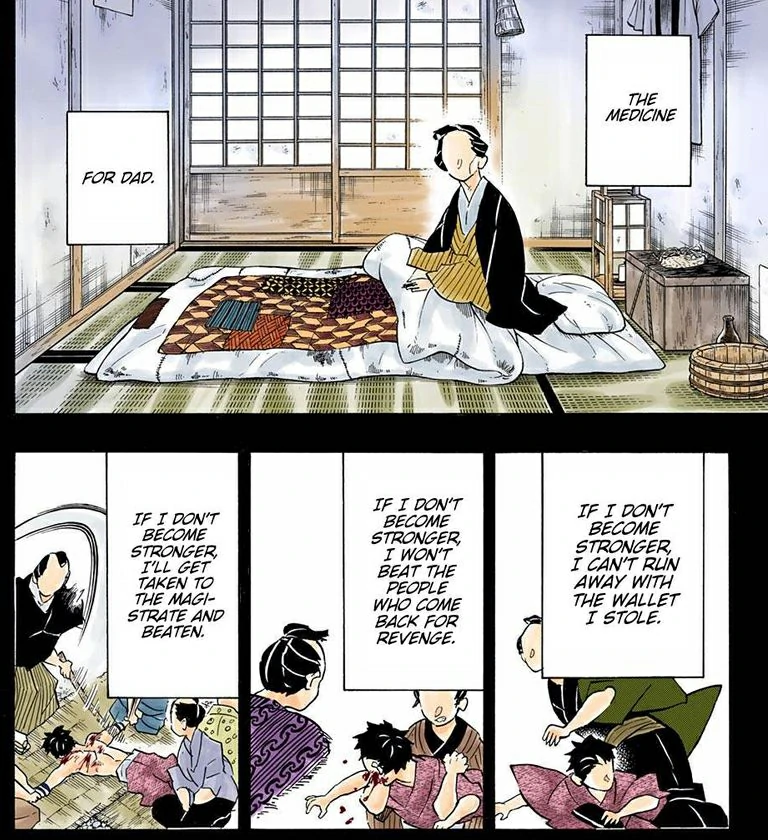
Hakuji’s first lesson was not that strength could save the weak. It was that a child could sacrifice everything and still arrive too late.
Keizo, Koyuki and the Soryu Dojo
Hakuji’s life changed when he met Keizo, a martial artist who operated the Soryu Dojo.
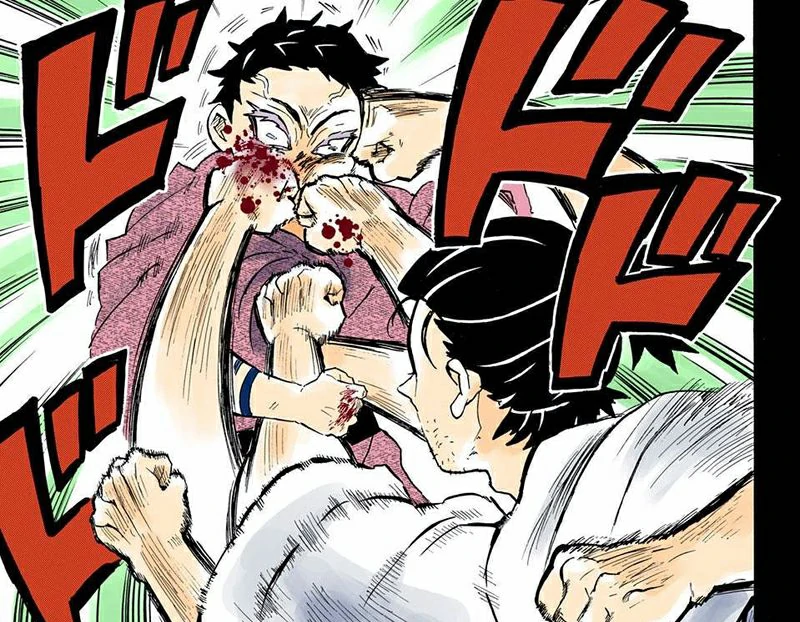
Keizo did something most people had failed to do: he defeated Hakuji decisively, then refused to treat him as a monster. After beating the violent teenager into submission, he brought him home.
The dojo itself was struggling. A neighboring swordsmanship dojo repeatedly harassed Keizo because its members wanted his land, leaving the Soryu Dojo without students.
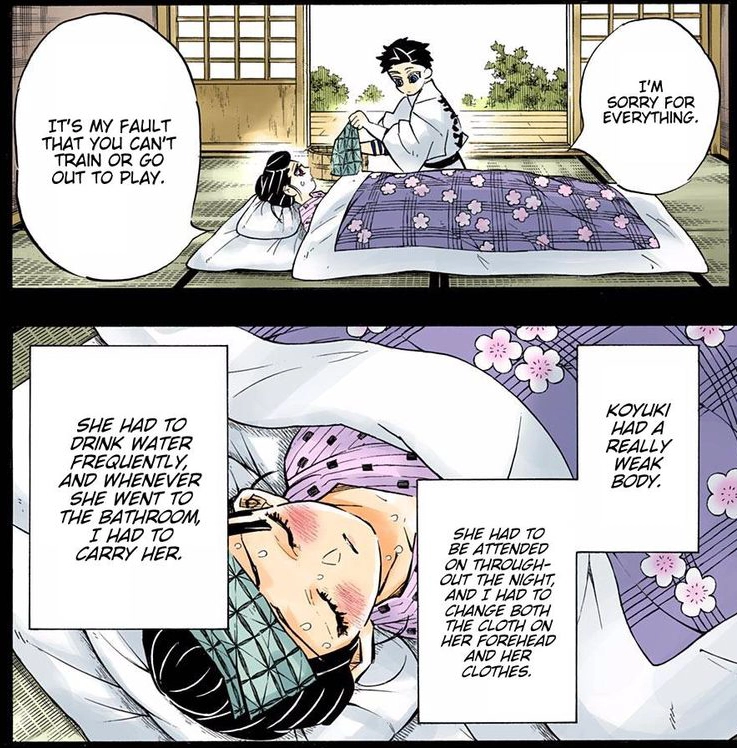
Keizo also carried a private burden. His daughter, Koyuki, was two years younger than Hakuji and had been sick for most of her life. Her mother had already died after being unable to endure the fear that the child might die first.
When Hakuji first saw Koyuki coughing endlessly in bed, he recognized a scene he knew too well. Her weakness recalled his father’s illness, but this time Hakuji was given another chance to care for someone instead of standing alone.
He became Keizo’s only student and Koyuki’s caretaker whenever her father left for work.
The work did not frighten him. He had already spent years caring for his father. He knew how to prepare medicine, watch over someone through difficult nights and remain beside a bed when there was nothing dramatic to do.
Koyuki sometimes cried during their conversations because she feared that her future would never extend beyond sickness. Hakuji, who had once lost all belief in a future of his own, became the person who encouraged her to imagine one.
Living beside Keizo and Koyuki gradually healed him.
The violent boy discovered ordinary pleasures: tending a garden, caring for the ornamental carp that Keizo and Koyuki loved, and drawing pictures simply because they made Koyuki happy.
For the first time since his father’s death, Hakuji was no longer surviving from one fight to the next. He belonged somewhere.
The Rival Dojo and Bell Splitter
The neighboring dojo continued to create trouble. Its arrogant heir was attracted to Koyuki, but he showed no concern for her condition. On one occasion, he dragged her outside despite her fragile health and fled when her asthma returned.
Keizo responded by arranging a formal confrontation between the two dojos.
Hakuji, then sixteen, defeated nine opponents by himself and forced the rival school to promise that it would leave both the Soryu Dojo and Koyuki alone.
Humiliated, the rival heir abandoned the agreed rules and attacked Hakuji with a real sword.
Hakuji answered with his bare hand.
Using the technique later known in English as Bell Splitter, he struck the descending blade from the side and broke it. The opposing dojo master was so astonished by the precision and beauty of the movement that he admitted defeat and apologized for his son.
The moment matters because it links Hakuji directly to the fighter Akaza later became. Bell Splitter and the Soryu Style did not disappear when his human memories were erased. They became the foundation of his demonic martial arts.
The Fireworks Promise and a Future Within Reach
Time passed, and the life Hakuji had assumed was impossible slowly became real.
At eighteen, he had grown into the successor of the Soryu Dojo. Koyuki, now sixteen, had recovered enough to leave her bed and move through the world that had once existed only beyond her window.
Keizo called Hakuji to him and offered two responsibilities: the dojo and Koyuki’s future.
Hakuji accepted with a mixture of disbelief, happiness and hope. The former thief, exile and “Demon Child” was being trusted with a home, a family and a chance to correct the direction of his life.
He made a private vow to protect them with everything he had.
During the first fireworks festival Koyuki could attend in good health, she reminded him of words he had spoken years earlier. Hakuji had once told the bedridden girl that she would live to see fireworks again and again.
She had carried that promise with her.
Beneath the lights, Koyuki asked Hakuji to become her husband. He promised to protect her and make her happy for the rest of their lives.
The fireworks became more than a romantic memory. They represented the future Hakuji believed he had finally earned—a future built not through theft or violence, but through care, patience and trust.
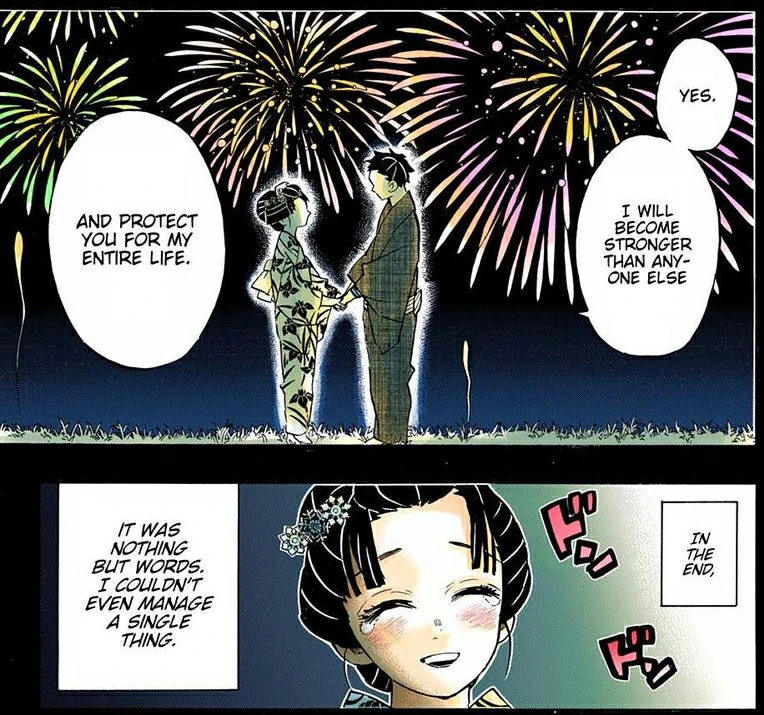
Why the fireworks matter: The names and visual language of Akaza’s later techniques repeatedly echo fireworks. His demonic power preserves the shape of a promise even after his conscious memory of the person behind that promise disappears.
The Poisoned Well and the Death of Hakuji
Hakuji’s happiness lasted only long enough to make the next loss unbearable.
After the neighboring dojo master died, his son inherited the school. Learning that Hakuji and Koyuki were preparing to marry, he returned to the grudge he had never released.
He and his followers knew they could not defeat Hakuji and Keizo in a fair fight.
They therefore chose poison.
While Hakuji was visiting his father’s grave to report his engagement, the rival dojo poisoned the Soryu Dojo’s well. Koyuki died soon afterward. Keizo, vomiting blood and carrying his daughter toward a physician, endured hours of agony before he also died.
Far away, Hakuji was seized by a violent and inexplicable sense of dread. By the time he returned at sunset, the future he had promised to protect was already gone.
He held Koyuki’s body and wept.
This second tragedy broke what remained of Hakuji’s belief in the world.
His father had died because the boy tried to save him through crime. Keizo and Koyuki died while Hakuji was briefly absent, murdered by people too weak to face him honestly.
Hakuji had trained, changed his life and become strong enough to defeat every member of the rival dojo. None of that strength had protected the people waiting for him at home.
He went to the neighboring dojo and killed sixty-seven people with his bare hands.
The violence was so extreme that the bodies were left unrecognizable. The sight was said to have traumatized a witness so deeply that memory itself failed. The incident sounded too impossible to be real and was treated like fiction; the surviving records were erased three decades later.
By the time the massacre ended, Hakuji’s human future was already over.
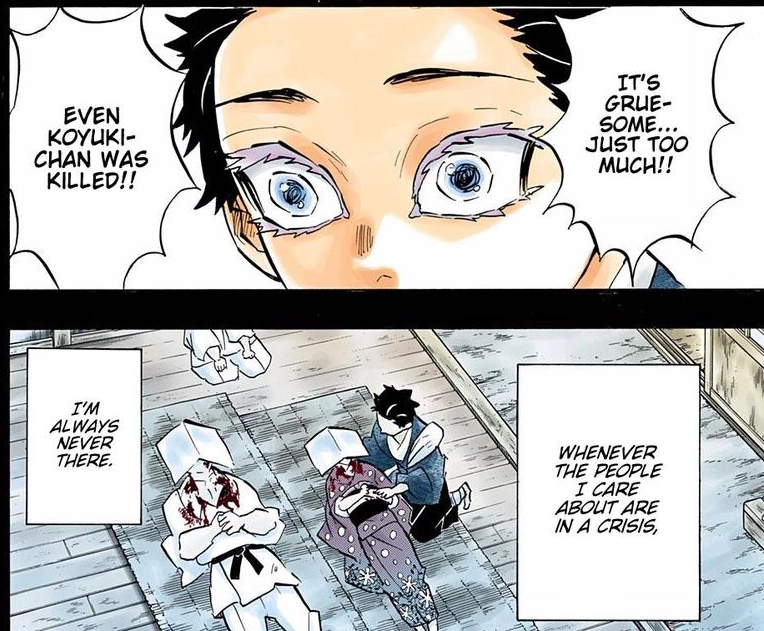
No tragic past erases the crime: Hakuji’s grief explains the road that led to the massacre, but it does not make sixty-seven deaths morally harmless. The story asks readers to understand how he broke without pretending that the consequences disappeared.
Muzan and the Birth of Akaza
After taking revenge, Hakuji wandered without direction. He moved like someone whose body had survived while the person inside it had already died.
He was prepared to kill anyone who blocked his path.
News of the impossible massacre eventually reached Muzan Kibutsuji. Muzan came to investigate the “demon” responsible and found a human whose bare hands had produced destruction beyond ordinary belief.
He forced a massive amount of his blood into Hakuji.
Hakuji did not resist.
Muzan did not need to seduce him with immortality, revenge or ambition. Nothing remained in the human world that Hakuji wished to protect. Whether he lived, died or became something inhuman no longer mattered to him.
From that emptiness, Akaza was born.
The transformation erased his conscious memories. He forgot his father, Keizo, Koyuki, the Soryu Dojo and the fireworks beneath which he had promised a lifetime.
But forgetting was not the same as escaping.
The past remained embedded in his instincts. Hakuji’s body, training, guilt and unfulfilled promise returned in distorted forms throughout Akaza’s demonic existence.
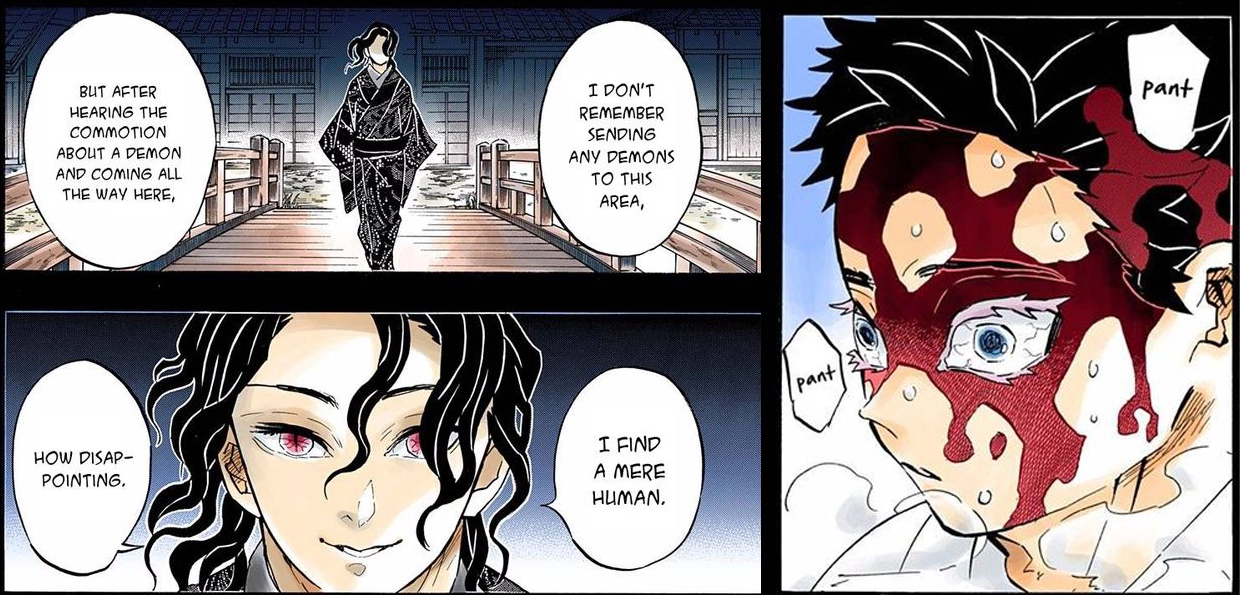
Muzan erased Hakuji’s memories, but he could not erase the shape those memories had carved into him.
How Hakuji’s Memories Survived Inside Akaza
Nearly everything associated with Akaza carries a trace of the human life he cannot consciously remember.
The Blue Markings and Hakuji’s Criminal Tattoos
Akaza’s body is covered with thick blue markings that resemble the criminal tattoos Hakuji received as punishment.
Penal tattooing did more than record an offense. It publicly marked a person’s past and followed that person long after the sentence itself ended. Hakuji’s father wanted him to raise his head and begin again, but the markings declared that society would always remember what he had done.
As a child, Hakuji’s tattoos were limited. As Akaza, the pattern spreads across his face and body.
The visual progression reflects the way he descended further into violence. The punishment that once marked theft for the sake of medicine expands until it covers the demon responsible for centuries of killing.
Cerise Hair and the Memory of Koyuki
Akaza’s cerise hair is not officially explained in the story as a direct memorial. Still, the color creates a striking visual association with Koyuki’s eyes and the pink tones of the kimono she often wore.
Whether intentional or interpretive, the resemblance fits a larger pattern: the demon who remembers nothing continues to carry fragments of Koyuki in his design.
Destructive Death and the Soryu Style
Akaza’s Blood Demon Art is known as Destructive Death. It combines destructive shockwaves with the Soryu Style taught by Keizo.
His punches, kicks, stances and defensive movements are not the product of demonic instinct alone. They are the martial art of the man who gave Hakuji a home.
Even Bell Splitter survives. During the Infinity Castle battle, the sword-breaking movement recalls the technique Hakuji used as a teenager against the rival dojo heir.
Compass Needle, Snow and Koyuki’s Hair Ornament
Akaza activates Technique Development, Destructive Death: Compass Needle by creating a snowflake-shaped compass beneath him.
The image echoes Koyuki’s hair ornament and the “yuki,” or snow, within her name. The technique allows Akaza to sense an opponent’s Fighting Spirit, measure strength and respond to attacks with extraordinary accuracy.
It is a cruel transformation of love into combat.
A symbol associated with Koyuki becomes the instrument Akaza uses to find powerful warriors and destroy them.
Fireworks Hidden in the Names of His Techniques
The naming of Akaza’s techniques draws heavily from fireworks.
As Hakuji, fireworks represented recovery, marriage and the promise of many future summers with Koyuki. As Akaza, the same imagery survives only as violence: brilliant, explosive and gone in an instant.
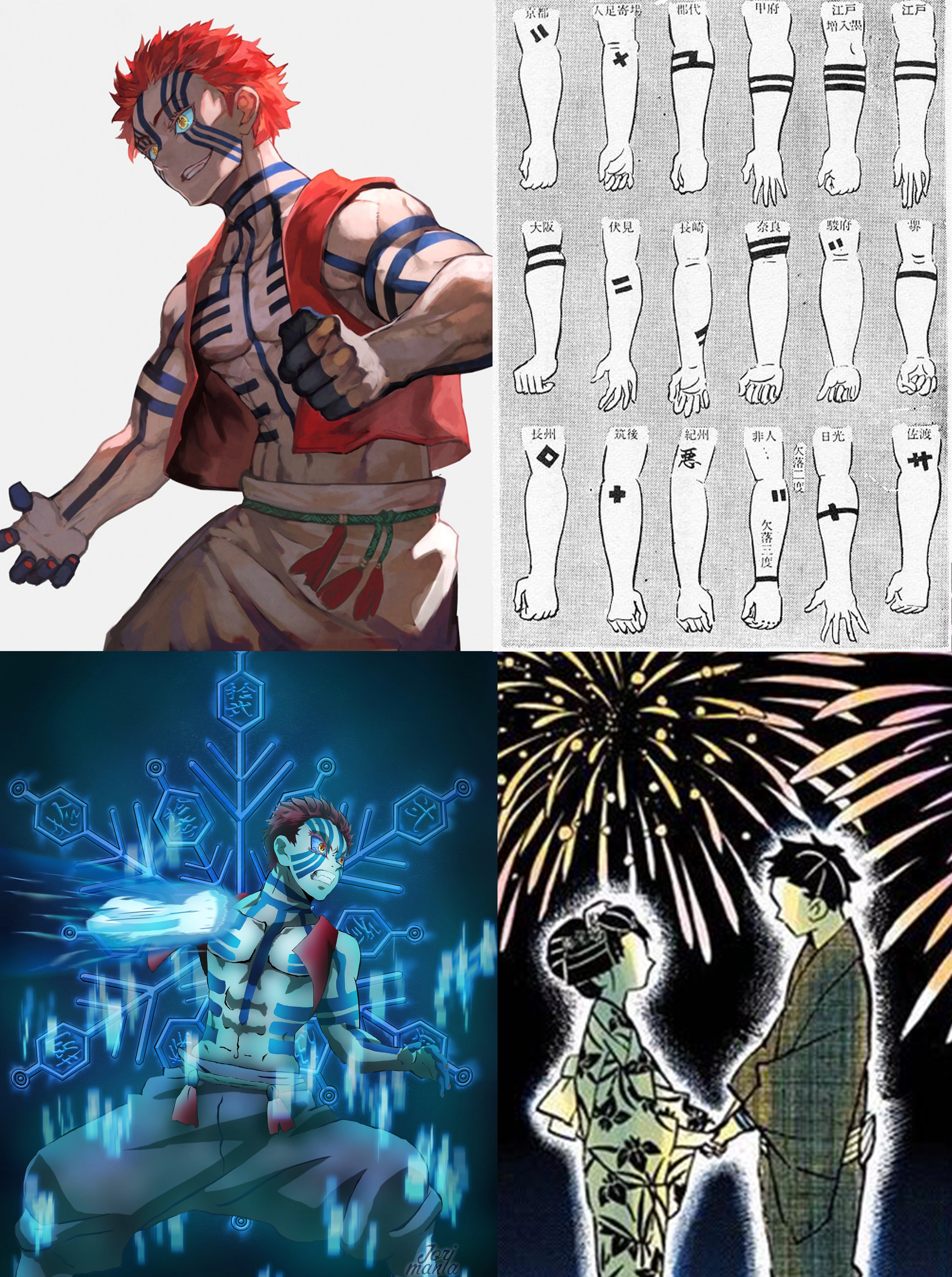
Why Akaza Admired Strong Humans
Akaza is unusually conversational during battle, especially when facing a powerful human.
He asks questions, demands names and continues speaking until his opponent responds. When he encounters someone whose strength excites him, he offers demonhood as a way to preserve that strength forever.
The invitation is not primarily an act of loyalty to Muzan.
Akaza wants the fight itself to continue.
During the Mugen Train Arc, he urges Kyojuro Rengoku to become a demon because the Flame Hashira’s discipline, spirit and technique are too valuable to vanish with a human lifespan. Akaza does not want another servant for Muzan. He wants an opponent he can battle for eternity.
When he later meets Tanjiro in the Infinity Castle and witnesses how dramatically the young swordsman has improved, he cannot hide his excitement.
Strong humans fascinate Akaza because they appear to have solved the problem that ruined Hakuji’s life. Their bodies, techniques and Fighting Spirit suggest that effort can create something durable—something the world cannot easily crush.
His attitude toward demons is very different.
Akaza openly hates Doma’s chatter and flippancy. He does not pretend to respect Kokushibo simply because Upper Rank One is above him; instead, he declares his intention to kill and surpass him.
Even his relationship with Muzan contains little warmth or worship. Muzan gives orders, and Akaza obeys. That is the structure of their relationship.
Akaza reserves genuine fascination for humans who have forged strength through years of discipline.

Why demonhood is his “gift”: Akaza believes human mortality makes hard-earned strength tragically temporary. Offering demonhood allows him to imagine that a worthy fighter—and therefore a worthy battle—will never disappear.
Why Akaza Hated Weakness
Akaza’s contempt for weakness is one of his defining traits.
When he first appears, he immediately tries to kill Tanjiro because the injured swordsman is lying on the ground and appears unable to fight. Later, when that same “weak” boy drives a sword into him and condemns him as a coward for fleeing the sunrise, Akaza reacts with shock and fury.
He cannot tolerate losing to someone he has already judged as inferior.
At first glance, this seems like simple arrogance. His human past reveals something more painful.
The weak people Akaza despised were not his sick father or the bedridden Koyuki.
He loved them.
His disgust was directed at two different targets.
Akaza’s hatred of weakness is therefore also hatred of Hakuji.
In his buried understanding, Hakuji is the man who made promises and failed to keep them. He could defeat armed adults with his bare hands, yet he was absent when Koyuki and Keizo needed him. He endured punishment for his father, yet that devotion still ended beside a grave.
Akaza dismisses Hakuji’s life as sad, ridiculous and not worth remembering because acknowledging that life would mean confronting helplessness.
The world Hakuji knew crushed vulnerable people and allowed their lives to be extinguished at any moment. Akaza responded by becoming a being who needed no care, no pity and no one else.
He convinced himself that the strongest person could never again be humiliated by loss.
Akaza did not hate the sick people he once protected. He hated the powerful young man who could not save them.
Deep within his subconscious, strength became a fantasy of reversal. If he became powerful enough—stronger than every opponent, stronger than death itself—perhaps he could undo the moment when everything was taken from him.
The tragedy is that every step toward demonic power carried him farther from the people for whom he had first wanted strength.
Akaza’s Pursuit of the Supreme Territory
Akaza devotes his demonic life to martial arts.
He seeks opponents with highly refined Fighting Spirit and treats combat as the only meaningful measure of existence. Victory confirms that he is moving forward. Defeat proves that the strength he desires remains beyond his reach.
This is why he shows no deference to Doma or Kokushibo. Their higher rank is not sacred to him; it is an insult he intends to erase by becoming stronger.
Giyu likens Akaza’s blind devotion to slaughter to an asura—a being consumed by conflict.
Akaza wants to pass beyond ordinary mastery and enter the Supreme Territory. He believes that somewhere beyond technique, instinct and Fighting Spirit lies a level of power in which he can no longer be defeated.
His obsession becomes so strong that, after Tanjiro decapitates him, Akaza begins overcoming the fatal weakness of demons and attempts to regrow his head.
At that moment, the pursuit is no longer about defeating Tanjiro and Giyu. Akaza is trying to evolve beyond the rules that define his existence.
Had his human memories not returned, he might have completed that transformation and overwhelmed both swordsmen.
But the memories do return.
Tanjiro reaches the Selfless State, removing the Fighting Spirit on which Compass Needle depends. More importantly, the battle opens the locked place where Hakuji’s past has remained buried.
For the first time in more than a century, Akaza is forced to ask why he wants strength at all.
There is no one left for him to protect.
There is no promise his victories can fulfill.
The Supreme Territory cannot return his father, Keizo or Koyuki.
How Akaza Finally Returned to Hakuji
Koyuki becomes the voice that reaches Akaza when combat, pain and decapitation cannot.
As his memories return, the demon remembers the life he had rejected as meaningless. He remembers his father’s love, Keizo’s faith, the quiet days at the dojo and the promise beneath the fireworks.
He also remembers his failure.
Hakuji weeps and asks forgiveness because he could not protect Koyuki. She does not answer him with accusation. She welcomes him back.
That acceptance ends the battle more completely than any blade.
Akaza stops trying to regenerate. He turns his destructive power against his own body and accepts defeat. Before disappearing, he offers Tanjiro a small smile of gratitude—the person who forced open the door to the memories he had spent more than a century escaping.
As Akaza fades, his demonic form gives way to Hakuji.
His father, Keizo and Koyuki do not abandon him. They choose to remain beside him even as he descends into the flames that represent the punishment for centuries of killing.
The scene does not erase Akaza’s crimes. Hakuji must still answer for what the demon became.
What it restores is his humanity.
For most of his demonic life, Akaza believed that needing others was weakness. In his final moments, he is saved precisely because the people he loved never stopped reaching for him.
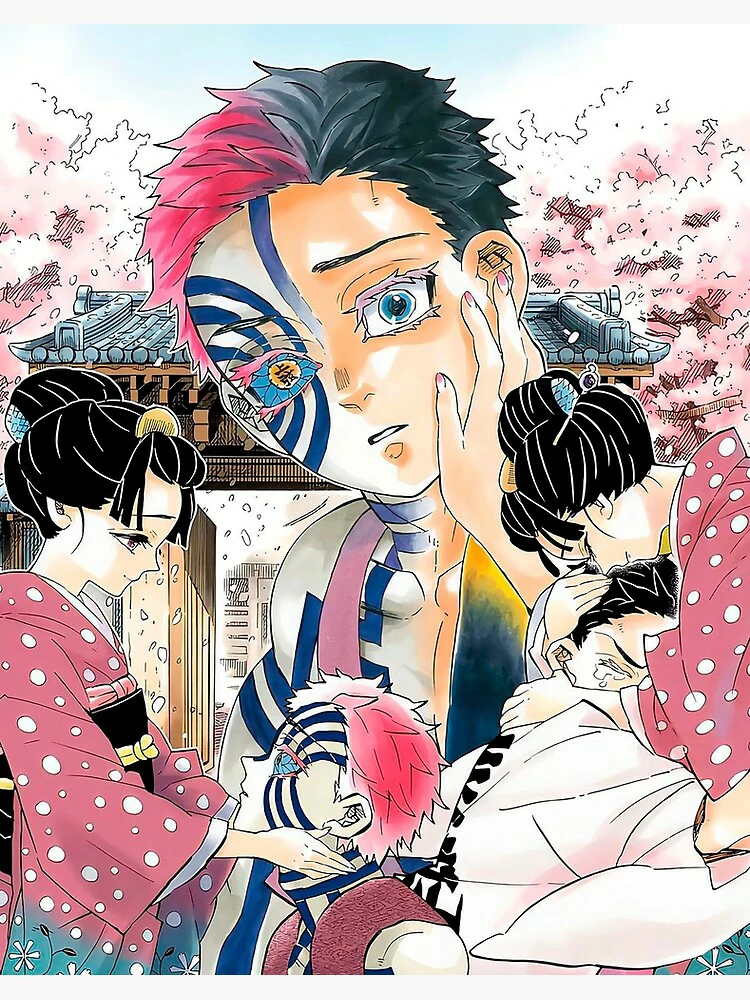
The final reversal: Akaza spent more than a century trying to become too strong to lose anyone. He found peace only when he stopped fighting and allowed the people he had lost to hold him again.